


The consensus reads Thursday’s Treasury auction as a routine data point in an ongoing rate story. The 30-year bond yield warning embedded in a 5.216% clearing rate (the highest since 2001) is something more uncomfortable: a market pricing in structural fiscal deterioration, not a cyclical blip that tighter Fed policy can easily remedy.
What the Auction Actually Said
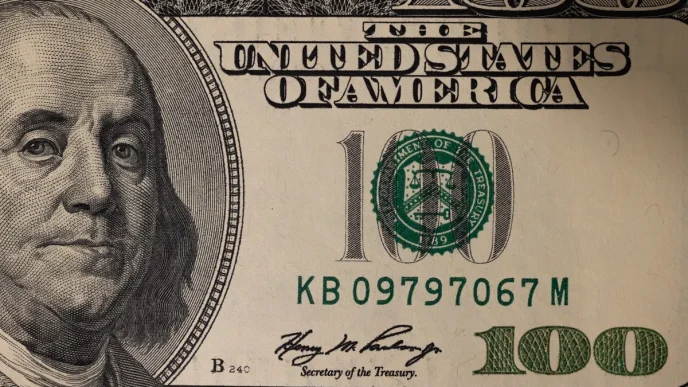
The US government sold $25 billion of 30-year bonds at a yield of 5.216%, the most since 2001. According to VT Markets, that represented a rise of 0.158 percentage points from the previous auction, not a dramatic single-session lurch, but a steady, directional grind that investors in the long end will recognise as the more troubling variety of move. Markets that drift in one direction tend to keep drifting.
The broader context matters here. Chase notes that in May and also July of 2025, the 30-year Treasury yield rose above levels not seen since 2007. Thursday’s auction extended that pattern rather than breaking it. A recent intraday high of 5.27% is the highest print since 5.28% on 7 July 2006. The long end of the curve is not behaving like an instrument waiting for the Fed to catch up. It is behaving like one that has concluded the Fed’s trajectory is largely irrelevant to the problem.
John Fath, a managing partner at BTG Pactual Asset Management US LLC, put the structural logic plainly: ‘The only clear solution I see, is the US government tightening its budget. The whole game plan of trying to move issuance up to the front end: You can only do that so much, right? Then it becomes what I would call irresponsible.’ The Treasury did not respond to requests for comment.
The 30-Year Bond Yield Warning and the Policy Bind
The secular backdrop amplifies the concern. The last secular top in US interest rates was 1 September 1981, when the 3-month yield hit 17.01%, the long bond stood at 14.70%, the 10-year at 15.41%, and the 2-year at 16.78%. The secular bottom arrived on 9 March 2020, when the long bond yield fell to a record low of 0.99% and the 10-year touched 0.54%. The direction since has been unmistakably upward at the long end, and the headwinds are accumulating rather than dissipating.
US debt has topped $40 trillion. The debt-to-GDP ratio is projected to approach 123%. Deficit spending remains structurally embedded in Congressional behaviour, Boomer retirements are compressing the fiscal space available for Social Security, Medicare, and Medicaid, and the deflationary forces of the previous two decades (just-in-time manufacturing, global wage arbitrage) have largely run their course. The only credible structural offset is AI-driven productivity, and that is conditional.
Which brings the analysis to the policy bind the 30-year bond yield warning is now forcing into the open. The argument being advanced in some quarters is that the bond market itself is doing the tightening, relieving pressure on the Fed to act. That reading has a significant flaw. It takes over $3 trillion on the Fed’s balance sheet to peg rates where the Fed believes they should be. Claiming that bond market conditions substitute for policy action, while simultaneously opposing the quantitative easing and interest-on-reserves mechanisms that make the peg possible, is a position those conditions cannot support indefinitely.
Cyclical recessions may compress inflation temporarily, as they have before. Congressional spending, however, is deeply entrenched, and tariff policy introduces additional inflationary pressure precisely when the long end is demanding more compensation for fiscal risk. The 30-year bond yield warning is not, in other words, a message about the short-term rate path. It is a message about whether the institutional commitment to fiscal discipline is credible at all.
The next test will come quickly. A USMCA trade deal breakdown with Canada is, by several accounts, increasingly likely, another variable that the long end will be watching and pricing, with characteristic lack of patience.