


The Russia drone defence decree now dominating business headlines is being read, almost universally, as a wartime logistics story: overwhelmed defences, improvising oligarchs, a government passing the bill to the private sector. That reading is not wrong. But it is incomplete, and the part being skipped over may matter rather more to Russia’s economic structure than to its air-defence coverage.
What the Decree Actually Says
The core facts are well-established. A Kremlin decree issued last month warned that any company failing to take responsibility for protecting itself against Ukrainian drone attacks could face temporary state seizure. PBS News reports that Putin has decreed the state can temporarily seize control of critical infrastructure facilities if private owners fail to protect them or rebuild them after strikes. Separately, POLITICO notes that the decree gives Russia’s Federal Agency for State Property Management extensive powers to seize industrial sites if their owners have failed to take protective measures against uncrewed aerial vehicles, among other risks.
The word “temporary” is doing considerable work in that framing. How temporary, under what conditions, and who decides when the emergency has passed, none of that is specified in what has been publicly disclosed. That ambiguity is not a bureaucratic oversight. It is a feature.
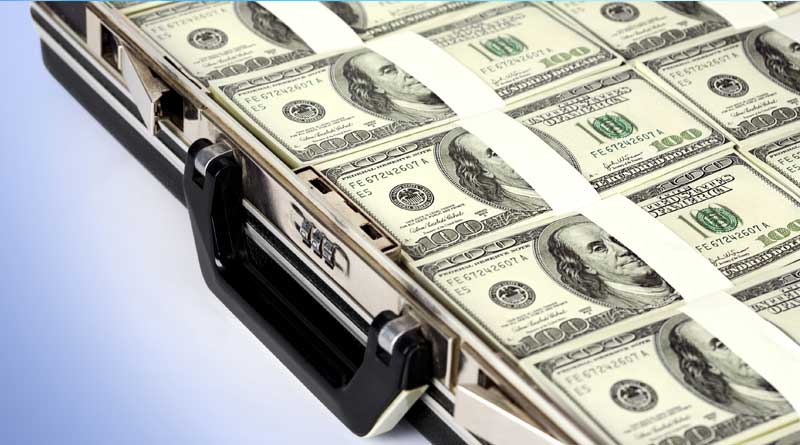
Businesses across Russia are now leasing air-defence systems from defence firms or building their own, according to people close to Russia’s business elite and defence sector. Job advertisements show that some companies are hiring gunners to shoot down drones. In the first half of 2026, businesses spent more than 440 million rubles on counterdrone systems, nearly seven times as much as in the same period the previous year, according to state news agency Tass, and the actual figure is likely higher because businesses are not required to report expenditure on drone defences.
The Pressure Behind the Russia Drone Defence Decree
Ukraine’s drone campaign has been more effective than the consensus coverage tends to acknowledge. Since March, Ukrainian drones have carried out some 200 strikes on Russian refineries and hit at least 36 logistics centres, including those of Russia’s biggest online retailers, Ozon and Wildberries, according to Rochan Consulting, a Poland-based firm that specialises in defence. Wildberries has started using steel netting around some of its warehouses. A July report from the Ukrainian military, cited by POLITICO, said its attacks have also disabled around 43% of the country’s oil refining capacity. That is not a nuisance; that is a structural problem.
When a Ukrainian drone struck one of Russia’s biggest steel producers earlier this year, the company’s owner and the country’s richest businessman, Alexei Mordashov, brought in an air-defence system to protect the firm’s biggest mill on the outskirts of Moscow, according to people familiar with the matter. The scale of the response illustrates where the threat now sits: not at the front, but deep inside Russian industrial geography. Russia’s enormous landmass, which once helped it repel invading armies, now spreads its available air defences thin across territory that is simply too vast to cover comprehensively.
The government has also issued a decree allowing Russian postal workers to carry weapons and ammunition to take down drones, without specifying exactly what kinds of weapons they will be able to use. ‘The Kremlin is shifting more and more of the burden of protection to the shoulders of private business,’ said Alexandra Prokopenko, a senior analyst at Carnegie Russia Eurasia Center, a think tank based in Berlin.
The consensus is treating this primarily as a defence story. The more uncomfortable read is that it is also a property-rights story. A state empowered to seize businesses that fail a loosely defined protective standard has acquired a mechanism that need not be limited to drone emergencies. The decree does not require businesses to succeed in defending themselves; it requires them to have taken steps. Who assesses whether those steps were adequate is, again, not specified. The Federal Agency for State Property Management now has extensive formal powers over industrial sites. How that interacts with the longer-running, well-documented pressure on oligarch-owned assets in Russia is a question the drone-defence framing tends to elide.
Businesses spent nearly seven times more on counterdrone systems in the first half of 2026 than a year earlier, and that bill will keep rising, regardless of whether the drone threat is ever fully contained. The decree ensures it will.