


The MishTalk consensus on the Trump Russia diesel deal is that it represents a bold, if unorthodox, energy play. The numbers in Trump’s own Truth Social posts, and the reaction from within his party, suggest something considerably less flattering.
What Trump Actually Announced, and What It Amounts To
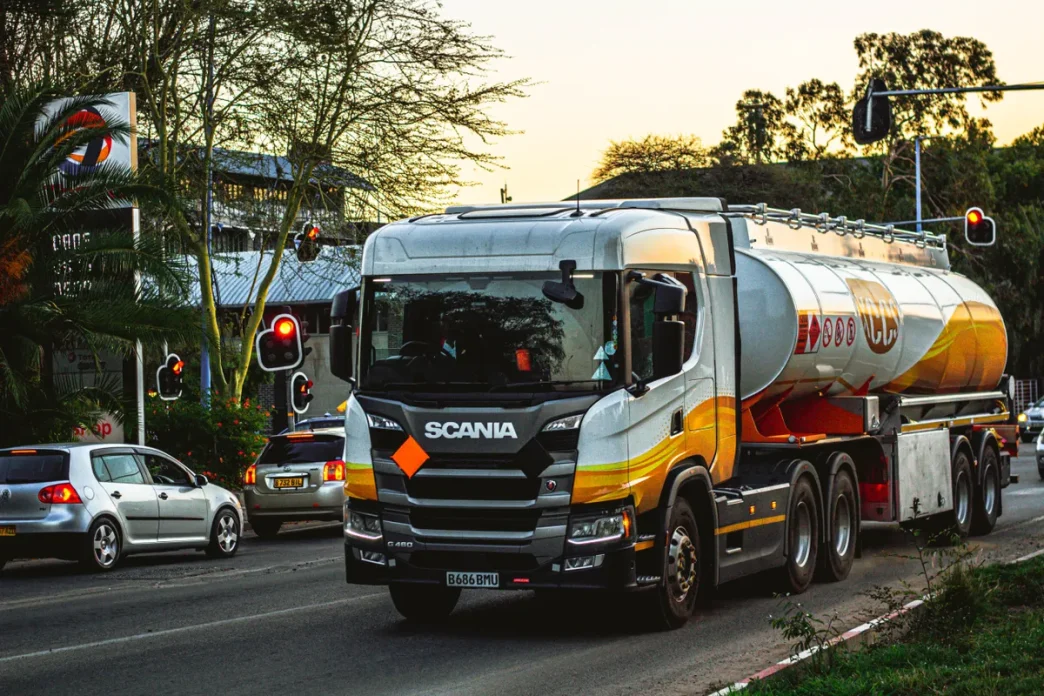
Trump posted on Truth Social that he had concluded a discussion with Vladimir Putin in which Russia would supply over 300,000 tons of diesel fuel immediately, a further 500,000 tons during November, and 1,000,000 tons ‘immediately thereafter.’ A longer-term delivery of 3,000,000 tons was also described, contingent on the condition of Russian refineries. Trump framed the arrangement as a mechanism for bringing diesel prices down ‘in record numbers, and fast,’ citing the importance to American farmers, ranchers, and truckers.
The difficulty with that framing is the context the announcement carefully omits. According to the report, fuel prices spiked this year after the United States and Israel attacked Iran, clogging a vital oil-shipping corridor. The Trump Russia diesel deal is, in other words, a partial remedy for a price problem that American foreign policy helped create. That the cure involves a country whose war economy the West has spent years trying to weaken is a detail the announcement did not dwell on.
Hours after the post, Yuri Ushakov, Putin’s foreign policy adviser, stated that there would be ‘no immediate resumption of discussions’ to end the Ukraine war. The Kremlin, it appears, saw no reason to offer political concessions alongside a commercially beneficial arrangement.
Republican Dissent the Trump Russia Diesel Deal Cannot Easily Absorb
The announcement was described by Trump as a ‘very big and important’ deal. Representative Don Bacon, a Nebraska Republican from a battleground district who is not running for re-election, called it ‘a grave error.’ Bacon argued it would have little effect on soaring diesel prices while delivering a victory to an adversary actively invading a neighbouring country. ‘It looks desperate,’ he said. The campaigns of two Republicans running in pivotal Senate races (former Representative Mike Rogers of Michigan and Senator Dan Sullivan of Alaska) also expressed disapproval.
The timing matters. The deal undercuts existing US sanctions on Moscow, announced under pressure from surging energy prices that have become, as the report describes, a severe campaign liability for Republican candidates ahead of the midterms. Three weeks before this announcement, Trump had signed the Lindsey Graham Russia Sanctions Bill, described as designed to put an economic stranglehold on Putin. The consistency problem writes itself.
A Finnish commentary translated in the report makes the structural point bluntly: Trump reduced American commitment to arming Ukraine, then started a war against Iran that drove up energy prices, and is now attempting to ease that pressure via a deal with precisely the country whose war economy Western sanctions were supposed to weaken. The Finnish view is that this is not a plan. It is a sequence of individually improvised decisions, each creating the conditions that require the next.
The Nobel Grievance and Where the Facts Sit
Alongside the diesel posts, Trump published an extended complaint about not receiving the Nobel Peace Prize, claiming he had settled eight named wars and deserved the prize more than any person who had ever received it. He listed the conflicts as Cambodia and Thailand; Kosovo and Serbia; the Democratic Republic of the Congo and Rwanda; Pakistan and India; Israel and Iran; Egypt and Ethiopia; Armenia and Azerbaijan; and Israel and Hamas.
The 2026 Nobel Peace Prize was awarded to Navanethem ‘Navi’ Pillay, a former United Nations High Commissioner for Human Rights, for her efforts to promote peace and international law, according to the United Nations. Trump, describing the laureate as someone ‘nobody has ever heard of,’ called the award ‘an indelible stain on Norway’ and said the prize had been ‘forever discredited.’
Trump also cited María Corina Machado as having told the media he deserved the prize ‘more than any person that has ever received it.’ According to the Nobel Peace Center, Machado was herself awarded the 2025 Nobel Peace Prize for her work promoting democratic rights in Venezuela and her efforts toward a peaceful transition from dictatorship. In 2024, Reuters reported the prize went to Nihon Hidankyo, a Japanese grassroots movement of atomic bomb survivors from Hiroshima and Nagasaki. The committee, in other words, has in recent years recognised the survivors of a nuclear attack and a democracy campaigner living under authoritarian threat. The framing that it is run by ‘radical ideologues’ who are ‘enemies of civilisation’ is a characterisation the prize’s recent history does not obviously support.
Trump also said Ukraine should ‘get a new president,’ linking Volodymyr Zelensky’s strategy of striking Russian oil infrastructure to high global fuel prices. The Ukrainian strategy of mid- and long-range strikes on Russian supply lines and oil infrastructure has, by the report’s own account, helped Ukraine stall Russian advances and reclaim some territory. The connection between that strategy and American fuel prices is one Trump asserted without supplying the intervening logic. Zelensky ‘wants to make problems for the world,’ Trump told reporters at the White House on Saturday. The Kremlin’s simultaneous refusal to resume peace discussions suggests that rewarding Russia with a diesel export deal has not, so far, produced a reciprocal diplomatic concession.