



The prevailing frame around data centres and the midterms treats this as a technology-policy argument. Data centre energy costs, as the polling and the legislation now make clear, have turned it into something closer to a kitchen-table rebellion, and the numbers suggest the consensus has been slow to register quite how far up the ballot that anger runs.
What the Polls Are Actually Saying
A September survey of 1,000 likely Ohio voters by Bowling Green State University found that 70% viewed data centres as bad for the environment and 69% saw them as bad for home-energy costs. Almost eight in ten favoured a temporary construction pause. A Michigan State University poll found more than two-thirds of Michigan respondents opposed local data centres. A national Wall Street Journal survey showed 62% supported pausing development, with 39% calling it a top priority.
Those are not niche numbers. When roughly seven in ten likely voters in a battleground state hold a negative view of an industry, and candidates are running television ads, billboards and charter amendment campaigns around it, this is no longer hyperlocal noise. The question is whether either party has found a convincing answer, and the legislative record suggests neither has.
Data Centre Energy Costs and the Ratepayer Protection Act
Republican Sen. Jon Husted introduced the Ratepayer Protection Act on 16 July 2026, designed to shift electricity costs from residential consumers onto data centres directly. The optics of the bill were straightforward enough: Husted, facing attack ads labelling him ‘the face of data centres,’ needed something concrete to show voters on data centre energy costs. The House delivered it on 16 September 2026, passing the bill by a vote of 417 to 3, a degree of bipartisan agreement you rarely see in this Congress, according to Husted’s Senate office.
Then 43 Senate Democrats voted no, preventing the bill from reaching the 60-vote threshold needed to advance. Senate Democrats called it ineffective. Husted’s office called it a block on a bill that would have forced data centres to pay their own way. Whatever your read on the substance, the political consequence is that Husted can now point to a 417-3 House vote and Democratic obstruction, while Brown can counter that the bill was a cosmetic fix from the man who promoted data-centre tax incentives as lieutenant governor. Both claims are defensible. Neither resolves the underlying resentment.
That resentment is not confined to Ohio and Michigan. NPR has reported that, by one estimate, Maryland customers are paying somewhere around $168 to $216 more per year on their electricity bills primarily because of the data centre boom. The dynamic is national; it is just reaching a particular intensity in states where the buildout has been fastest.
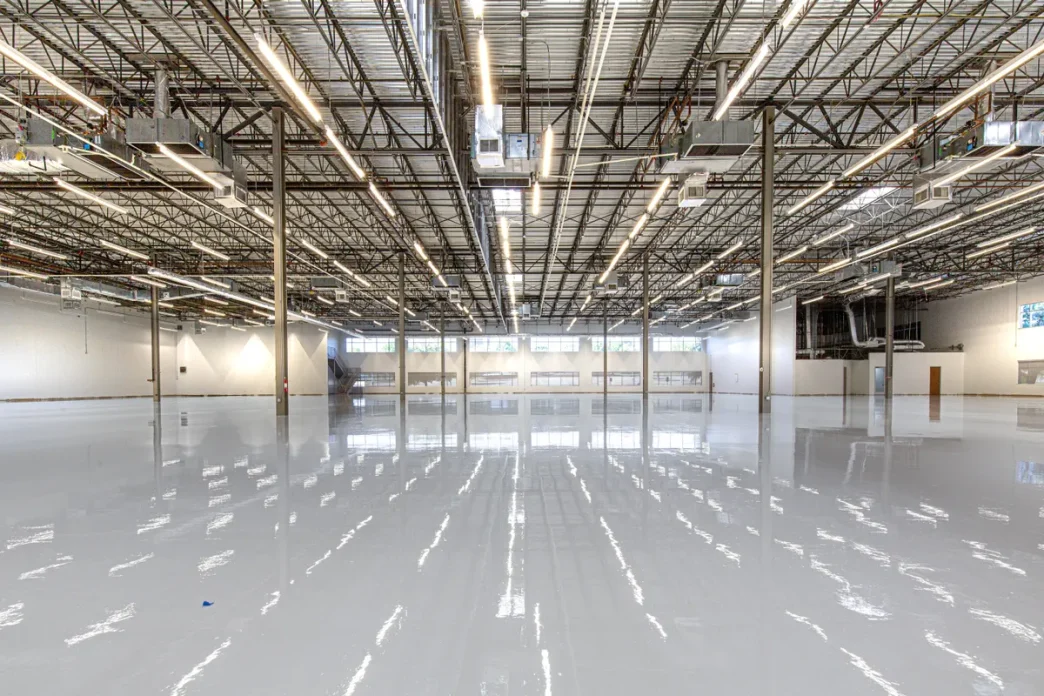
Ohio has more than 200 data centres operating, under construction or planned. A large concentration sits along Beech Road in New Albany, near Pataskala. What was farmland a few years ago is now miles of multistorey, windowless structures, whirring cooling fans running around the clock, construction cranes over cornfields, heavy trucks creating potholes. ‘For Sale’ signs have become a fixture on the two-lane roads nearby.
The Voter Who Switched
Brandyn Bernard, 37, a longtime Pataskala resident who voted for President Trump three times and flew a MAGA flag from his home in 2024, helped push for a local ban on data centres out of health, environmental and cost concerns. He now has a sign supporting the ban alongside signs for two local Democratic candidates, and plans to vote for Democrats this autumn. ‘I asked for help from Republicans, and I got nothing,’ he said.
Bernard is one data point, but the structural shift in Trumbull County, in north-eastern Ohio, is harder to dismiss. The county went for Trump in 2024 and against Sherrod Brown in his failed re-election bid that year. Democratic Vice Chair Kathy DiCristofaro said 4,200 voters registered either Republican or unaffiliated pulled ballots to vote in the Democratic primary this May. When she contacted those voters to ask why, data centres came back as a top answer.
The National Republican Senatorial Committee’s own August memo acknowledged the problem, warning that ‘data centers are the anchor hanging around Husted’s neck’ and advising candidates to focus on utility costs instead. That memo is the committee conceding the framing had already been lost. The Ratepayer Protection Act was the attempted correction. With 43 Senate Democrats blocking it, both sides now have a ready-made attack line, and data centre energy costs remain unresolved for the voters actually paying them.