


The dominant read on the US Navy’s new Strait of Hormuz time slots policy is that Washington remains firmly in charge of the waterway. The operational picture underneath that read is considerably less reassuring.
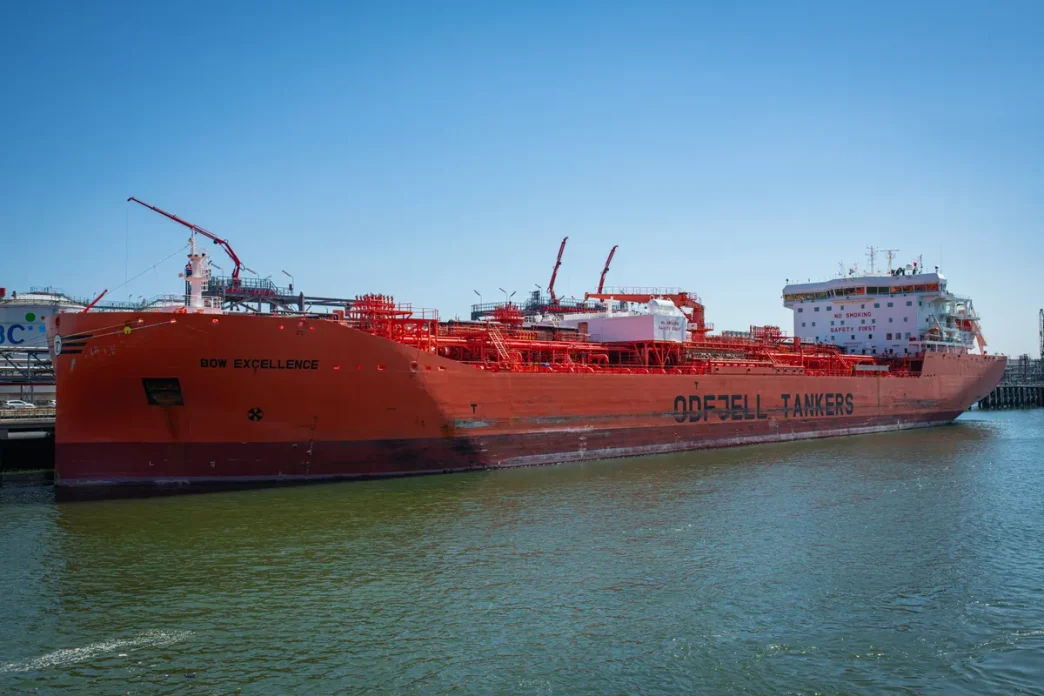
The US has asked tankers travelling through the Strait of Hormuz to sail only during two specific windows each day to guarantee military air cover, the Financial Times reported on 14 September, citing emails from the US naval co-ordination centre to maritime advisers. Washington has been offering air-based defence since May to ships using a route along the Omani coast on the strait’s southern side. That protection period was narrowed to two fixed daily time slots around the start of September, after Iran stepped up attacks on vessels moving at night.
Rationing protection to two windows per day is not a demonstration of dominance. It is an acknowledgement that the US cannot cover the strait continuously.
The Strait of Hormuz Time Slots Are Only Part of a Wider Picture
The scale of the enforcement operation has grown beyond what the headline policy implies. Arab News reports that the US military has already forced 99 commercial vessels to change course in the Gulf region as part of its blockade of Iranian ports. That is not a figure that suggests a contained or manageable operation, it is a sustained interdiction campaign with real costs, both financial and diplomatic, for shipping operators who had no direct stake in the US-Iran standoff.
The exchange rate of hostility has also risen sharply. The US military attacked and destroyed five Iranian oil tankers on one day; Iran responded by targeting ten ships near the strait, including two US vessels and eight oil tankers. These are no longer pinprick incidents. They are exchanges with a logic of escalation built into them.
On Truth Social, Trump posted that ‘the failing Nation of Iran wants to make a deal, quickly and badly,’ adding that he would ‘determine whether or not the U.S.A. will choose to engage, the concept of which we are open to.’ Oil markets were not moved by the overture. Crude, gasoline and diesel prices rose on the day, with further gains expected.
The Second Front Nobody Wanted Is Already Opening
Bloomberg’s analysis of the conflict identifies what may be the sharpest structural risk in the current situation: the more effective the US economic strangulation of Iran becomes, the more incentive Tehran has to accept losses it previously avoided. Judged by that logic, the policy is working, and working in a way that raises the stakes faster than Washington can manage them.
Bloomberg notes that Trump has said he expects the standoff to continue through the November midterms, at which point he believes Iran will be ready to make a deal. A Wall Street Journal report from 9 September adds a harder edge to that timeline: some of Trump’s most senior advisers told him the conflict may outlast his presidency.
The Houthi dimension now looks like the most consequential second-order development. Houthi forces (reportedly aided by IRGC guidance and Iranian promises of money and arms) fired multiple missiles into Saudi Arabia, wounding more than 70 people, and captured the port city of Mokha along with several nearby islands, according to Bloomberg. Mokha’s position puts Houthi missile launchers and fast boats potentially within 50 miles of the Bab el-Mandeb narrows, the waterway through which Saudi Arabia has been diverting roughly 5 million barrels of crude a day that would normally exit via Hormuz. Blocking that alternate route would compound the disruption already under way in the Persian Gulf.
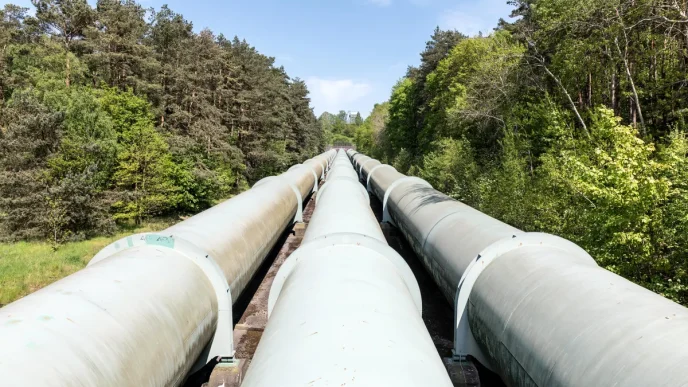
The pipeline picture deteriorated further over the weekend. Drones launched from Iraq struck Saudi Arabia’s East-West oil pipeline, forcing its closure and pushing crude prices higher still, according to Iran International. The strike points toward Iran-backed militia involvement, though no party has formally claimed responsibility. What it does, regardless of attribution, is shrink the list of alternative export routes available to Riyadh.
According to Axios, Saudi Arabia’s de facto leader Mohammed Bin Salman called Trump twice last week, requesting US air strikes on Houthi positions. Trump declined, unwilling to open a second front. But Houthi advances at Mokha have a way of joining fronts rather than creating new ones, and Bloomberg’s analysis suggests the window for keeping them separate may already have closed.
The Strait of Hormuz time slots story, then, is less a news item about scheduling than a data point in a wider deterioration. Bloomberg‘s framing, that the conflict is ‘fast becoming a struggle to determine the future of the wider Middle East’, may be the more accurate headline, even if it is the less convenient one.