



The official line on the Saudi pipeline drone attack is that repairs could take three to five weeks. That estimate deserves more scepticism than it has received, because it rests on an assumption that the same forces which struck once will not strike again.
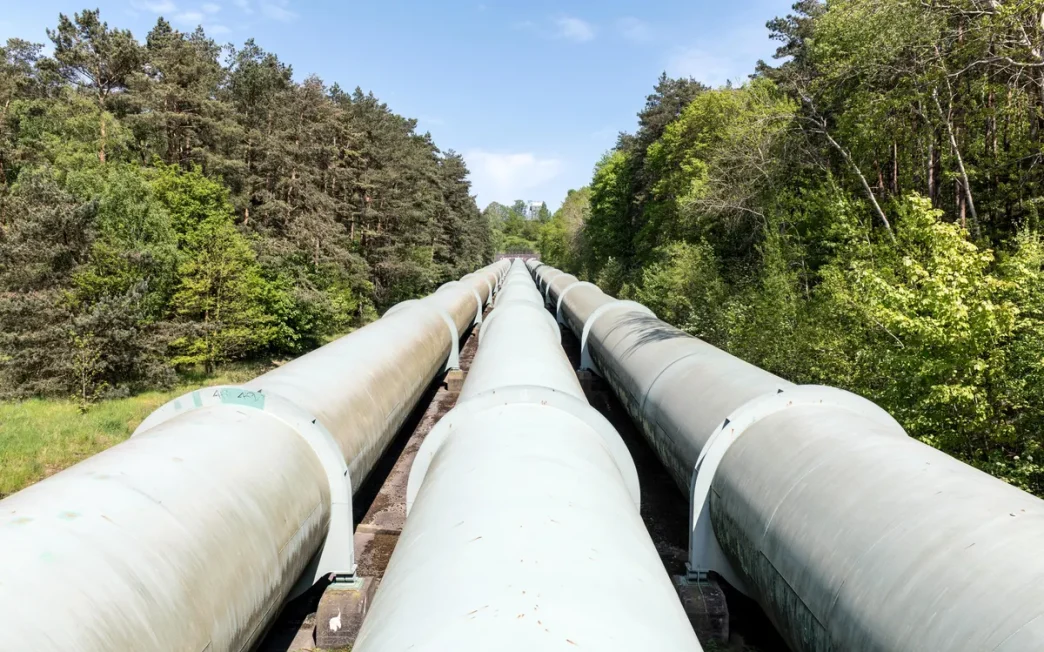
The East-West Pipeline, a 745-mile artery operated by Reuters-confirmed Saudi Aramco, runs across the breadth of the kingdom to connect Gulf-side production with the Red Sea port of Yanbu. It became the kingdom’s primary export route after Iranian attacks stifled shipping through the Strait of Hormuz. That strategic centrality is precisely what made it a target. Two regional officials told the Associated Press the damage, including at a major pumping facility, could take three to five weeks to repair, and that the pipeline may work partially in the interim, though they could not say how much oil might get through. Both spoke on condition of anonymity because they were not authorised to brief the media.
Three Pumping Stations Down, Not One
What the three-to-five week estimate does not fully account for is the scale of the infrastructure damage. According to Reuters, three pumping stations along the pipeline were hit in the attack, not a single point of failure. Repairing one major pumping facility is a different proposition from restoring three damaged stations simultaneously, particularly under the threat of further strikes. The Saudi pipeline drone attack, which the kingdom blamed on Iranian-backed militias in Iraq, has taken an estimated 4 million barrels per day offline. Analysts estimate at least 2.5 million barrels per day are stranded from an already tight global oil market.
In a non-conflict environment, a three-to-five week repair window for pipeline infrastructure is not inherently unreasonable. In the present context, it assumes that Iranian-backed forces in Iraq, Yemen, and elsewhere will remain idle while work crews restore the very route that has become the kingdom’s oil lifeline. That assumption is, at minimum, optimistic. If the pipeline was struck once with apparent effectiveness, the incentive to strike it again during repairs is considerable.
Saudi Pipeline Drone Attack and the Houthi Advance
The pipeline damage is not the only pressure point. Yemen’s Houthi rebels have captured the strategic islands of Greater and Lesser Hanish, according to government and Houthi officials, both sets of whom spoke on condition of anonymity. The islands lie 100 miles north of the Bab el-Mandeb Strait, the choke point connecting the Red Sea to open ocean and Saudi Arabia’s key Asian export markets. The advance also places the Houthis approximately 20 miles from a US military base in Djibouti, on the strait’s other side.
A rebel spokesman, Brig. Gen. Yahya Saree, said the Houthis fired dozens of missiles and drones at the King Khalid Air Base in the southern Saudi city of Khamis Mushait, targeting hangars, radar installations and ammunition depots. The statement did not specify when the attack took place. There was no immediate comment from Saudi Arabia on the claim.
For more than a month, according to the report, the Houthis have been striking Saudi oil infrastructure and shipping in the Red Sea. The Hanish islands were taken after hundreds of government-allied forces withdrew from the archipelago, per the officials cited.
Industry Executives Are Not Buying the ‘Temporary’ Line
Interior Secretary Doug Burgum told reporters at a Houston G-20 event that the disruption is temporary, and offered that ‘the prices in the prior administration were this high anyway.’ The Wall Street Journal reports that Chevron Chief Executive Mike Wirth struck a rather different tone at an energy conference in Austin, Texas. ‘All these mechanisms helped to mitigate the price and supply risk,’ Wirth said. ‘Those have largely now played out, and we don’t have nearly the buffers in the system that we did when it began.’ He added: ‘I wish I could tell you that I saw some reason why things would ease, but it’s difficult right now to see that happen.’
Commercial fuel stocks around the world have been depleting for more than six months, and strategic crude reserves cannot be tapped much further, according to oil executives cited by the Journal. US retail diesel prices have reached a record $6.23 per gallon, and gasoline, which had dipped below $4 during the summer, has risen to $4.32 per gallon.
The negotiating dynamics do not obviously favour a swift resolution. Wil VanLoh, founder and CEO of Quantum Capital Group, speaking at the same Austin conference, noted that ‘the advantage in most negotiations usually goes to the side that has time on their side, and is willing to be patient.’ Of Iran, he said: ‘They are willing to suffer. Their people have already suffered a lot for many decades.’
The Saudi pipeline drone attack has, in other words, landed in a context where the buffers are exhausted, the adversary is patient, and the repair timeline assumes a ceasefire in all but name. Chevron‘s chief executive is not predicting a quick easing; the consensus three-to-five week framing may be the most aggressively optimistic read available, and it is the one getting the least scrutiny.