


The Ulchi Freedom Shield exercises cut short by White House instruction is the headline. The detail underneath (specifically what happened in Pyongyang the same day Trump posted his rationale) is what the consensus coverage is underweighting.
On 16 August 2026, Donald Trump published a post stating that he had instructed Pete Hegseth, whom he styled ‘Secretary of War’, to ‘substantially reduce the Joint Military Exercises’ with South Korea. His stated grounds: a ‘very good relationship’ with Kim Jong Un, and a characterisation of North Korea as ‘unthreatening and respectful’ throughout his presidency. According to Axios, North Korea conducted a ballistic missile test on the same day, which military officials and experts assessed as an apparent protest against the very drills Trump was already moving to curtail. The sequencing is worth sitting with.
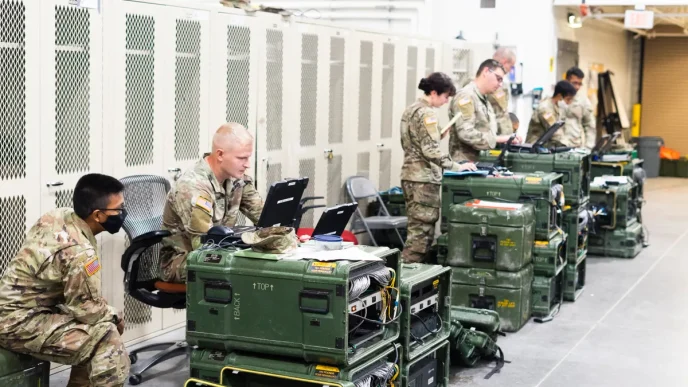
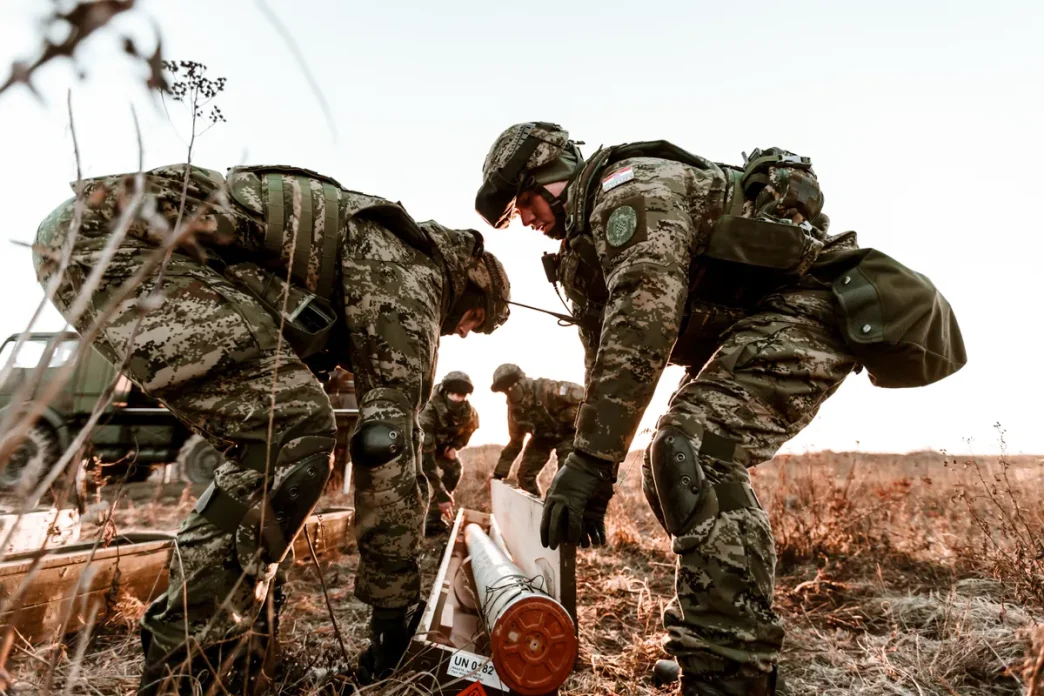
The exercise in question is the Ulchi Freedom Shield, which has been held annually under that name since 2022, though the summertime US-South Korea drills it evolved from stretch back decades. The exercise was scheduled to run for 10 days; it will now end on Friday 21 August, according to CNN. That is the operational reality behind Trump’s language of ‘substantial reduction.’
The missile test the narrative skips past
The prevailing read on Trump’s post treats it as another episode of ally-trashing for its own sake, rooted in personal affinity for authoritarian figures. That read is not obviously wrong. But it may be overweighting the psychological and underweighting the tactical signal coming from Pyongyang. North Korea firing a ballistic missile on the same day Trump announced the curtailment (and experts assessing that launch as a protest against the drills) raises a question the commentary has largely sidestepped: whose interests does a shortened Ulchi Freedom Shield actually serve?
Trump’s post frames the exercises as costly and ‘totally inappropriate and hostile’ to a country that has, in his telling, been respectful. He acknowledges it was ‘too late to cancel’ entirely, which concedes the reduction is partial rather than a clean break. The missile test, however, happened before or concurrent with the announcement. If the launch was indeed a protest, Pyongyang got its desired outcome within hours. That is not a vindication of Trump’s relationship management; it looks rather more like the opposite.
South Korea, Iran and the Ulchi Freedom Shield exercises cut in context
Trump’s post contains a passage he described as ‘somewhat unrelated (?)’: his account of asking South Korea’s president to join in what he called the ‘Denuclearization of the Islamic Republic of Iran’, and receiving the reply, ‘No thanks.’ The punctuation around ‘somewhat unrelated’ is doing considerable work. Seoul’s refusal to join the Iran effort arrived in the same statement as the announcement curtailing the very exercises that underpin Seoul’s security guarantee. The juxtaposition was Trump’s own, not an editorial imposition.
Mike Shedlock, writing on MishTalk, was direct about the tone: ‘I do object to the asinine tone of Trump’s statement and the further trashing of allies just to feed his larger than galaxy-sized ego.’ He did not, however, object to reducing the exercises on principle, noting that he thought the US should ‘declare the war won (for the 50th time)’ and leave. That distinction between the policy and the delivery is worth preserving. Shedlock’s objection is to the method, not the outcome per se.
The exercises that have now been truncated are not a marginal commitment. Summertime US-South Korea drills in some form have run for decades, and the Ulchi Freedom Shield iteration has been the annual fixture since 2022. Cutting them short, publicly, citing personal warmth for Kim Jong Un, on a day when North Korea launched a ballistic missile, is a sequence that the ‘Trump just likes dictators’ framing does not fully explain. Whether the curtailment was pre-arranged, reactive, or simply impulsive, the practical beneficiary in Pyongyang is the same regardless.
The exercise ends 21 August. What the next scheduled rotation looks like, given the stated policy shift, is now the open question Seoul’s defence planners will be working through.