



The consensus read on Hormuz shuttle run payments is that they represent a rational risk premium in a dangerous but manageable corridor. The data accumulating this week makes that framing look increasingly optimistic. Reuters reports that at least 12 attacks targeted tankers sailing through the Strait of Hormuz last week alone, the highest weekly tally since the war began on 28 February. The economics being offered to the sailors completing these runs have not kept pace with that trajectory.
What the Freight Numbers Actually Say
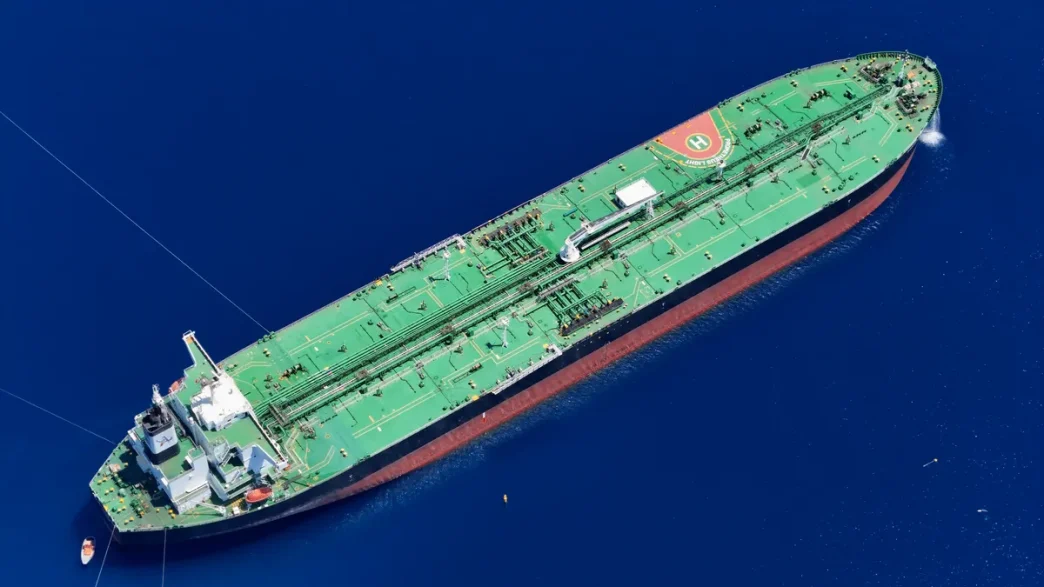
The Wall Street Journal reports that oil producers inside the Persian Gulf are paying between $30 million and $40 million for a round trip in and out of Hormuz, or $15 to $20 a barrel excluding insurance, according to shipbrokers. The arrangement works as follows: a very large crude carrier, known as a VLCC, enters the strait, loads at a Gulf port, exits the waterway, and transfers its cargo to a waiting vessel just outside. Before the war, buyers collected oil from inside the Gulf themselves. Tehran’s strikes on commercial vessels changed that calculus abruptly.
The freight rates on direct routes tell the same story in a different register. The cost of hiring an oil supertanker from the Persian Gulf to China topped $1.2 million a day in late September. On the eve of the war, that figure stood at about $231,400 a day, according to maritime data provider Clarksons Research. In early January it cost less than $40,000 a day. That is a roughly 30-fold increase over months, and the shuttle-run premium sits on top of it.
‘For many shipowners, the current market is generating revenues at levels rarely seen in the industry’s recent history,’ said Dimitris Maniatis, founder and chief executive of maritime-risk company Marisks. Richard Matthews, director of consulting and research at shipbroker E.A. Gibson, was more direct about the crew bonuses: ‘Given the millions being made at the moment, that’s absolutely nothing to the shipowners.’
Hormuz Shuttle Run Payments and Who Is Actually Bearing the Risk
A Shandong-based ship-staffing company is offering as much as $25,000 for a round trip as reward, according to seafarers and recruitment advertisements seen by the Journal. For a junior rating or cadet earning around $1,500 a month, that sum represents more than a year of normal wages, compressed into under a week. Crews described as coming from India, the Philippines and China are being lured with payouts worth two or three times their typical monthly salary.
The lived experience of those transits is instructive about what that money is buying. A first mate on a shuttle tanker told the Journal he had been in and out of Hormuz twice in a single month. Both crossings were made at night, with windows shut and lights turned off. His vessel lost GPS signal for hours on each transit, and the crew navigated using radar signals to calculate angles and distances relative to islands and headlands. Half the crew resigned after a single round trip. The ship management company replaced them by offering extra pay.
The International Maritime Organisation’s tally as of 5 October 2026 stands at 91 confirmed incidents in and around the Strait of Hormuz and the wider Middle East since the war started, with 24 seafarers killed. UK maritime authorities logged another string of tanker strikes between 2 and 4 October, and the Journal noted seven ships hit since 28 September after a quieter stretch. The Joint Maritime Information Center still rates the threat as severe, with deliberate attack assessed as highly likely.
Pre-war traffic ran at about 138 ships a day. Wartime commercial passages have been far lower, on the order of 1,500 over long stretches of the conflict. Dark shuttle tankers completing in-and-out Gulf runs are a subset of that traffic, which means their effective hit rate sits above the average transit figure. War-risk insurance has been quoted as high as about 10% of hull value for a Hormuz transit. That is the market’s own assessment of loss probability, stated as a price rather than a sentiment.
Where the Consensus May Be Misreading the Trajectory
The popular framing is that shuttle runs are a workable, if expensive, adaptation: producers absorb elevated freight costs, shipowners post exceptional returns, sailors collect a premium, and oil keeps moving. That framing assumes the current incident rate is a ceiling rather than a floor. With attacks on Hormuz tankers reaching their highest weekly count since the war began, the assumption deserves pressure. At 12 or more strikes in a single week, the incidents-per-transit figure is no longer a tail risk comfortably priced into a 10% insurance quote. At some point, the crew premium required to staff these vessels will exceed what shipowners describe as ‘absolutely nothing’, and the shuttle-run model becomes harder to crew, not just more expensive to run.