



The consensus read on the Houthi capture of Mokha is that it tightens the group’s grip on Red Sea shipping lanes. That framing is not wrong, but it concentrates attention on the maritime dimension while a potentially larger shock was unfolding inland, largely beneath mainstream radar.
What the port seizure actually means for Saudi Arabia
The Houthi militia pushed out forces allied with the internationally recognised Yemeni government on Thursday, seizing the city of Mokha and its port, according to a local official in the city and a senior provincial official, both of whom spoke on condition of anonymity because they were not authorised to speak to the media. The city had been the focus of several days of fierce ground battles.
Mokha matters for reasons beyond its coastline. The Houthis have previously attacked shipping from positions further north; control of Mokha gives them a foothold closer to the strait, with implications for global trade and oil markets, analysts say. For Saudi Arabia and its Yemeni allies, it raises uncomfortable questions about their capacity to constrain the group’s expansion.
‘It will put the U.S. and the Saudis and their allies in a much tighter situation than they already are,’ said Farea Al-Muslimi, a Yemen specialist at Chatham House, a research institution in London.
Adam Baron, a Yemen-focused fellow at New America, a research organisation in Washington, was blunter about the longer arc: ‘This is potentially one of the more significant turning points, particularly in recent years, of the Yemen conflict.’ Saudi Arabia had pivoted to Red Sea export routes for most of its oil, but escalating tensions with the Houthis have already disrupted that corridor over recent months.
The pipeline story the port headlines crowded out
Here is where the consensus narrative may be underweighting the second-order effect. While the Houthi capture of Mokha was driving coverage, reports were circulating (without mainstream confirmation at the time of writing) that the east-west Saudi pipeline had also been struck. The report characterised these as unverified; what came after is harder to wave away.
According to NDTV Profit, the attack caused extensive fire damage at pumping stations near Al Mesba’ah and Al Dhekra, with thick black smoke rising from the sites. A 100-kilometre smoke column visible in satellite imagery, combined with heat anomalies recorded along the pipeline’s route, gives the unverified-pipeline narrative considerably more weight than the absence of mainstream headlines might suggest.
The oil price reaction did the rest of the narrating. Brent crude, the global benchmark, rose to more than $105 a barrel after Mokha fell, its highest level in months. Following reports of the pipeline attack, Streamline reported Brent futures pushed past $109 a barrel. That is a $4 move on top of an already elevated print, driven by an event most major outlets had not yet confirmed.
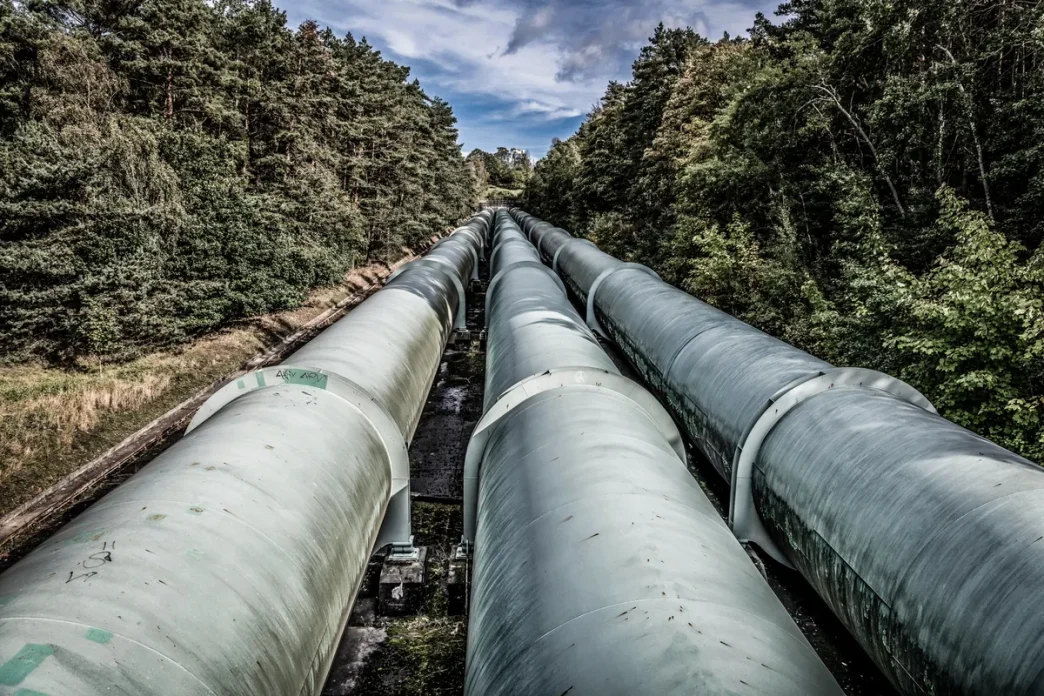
The pipeline is not a minor piece of infrastructure. It runs east-west precisely to give Saudi Arabia an export route that bypasses the Strait of Hormuz entirely. Hitting it, if confirmed, is a direct challenge to the logic that pipeline capacity could insulate energy markets from Red Sea disruption. The two vectors (maritime and overland) are now both under pressure simultaneously.
Pumping stations, unlike pipeline sections themselves, are not quick fixes. They require specialist engineering, and damaged infrastructure of this kind can take weeks or longer to restore. The market is pricing in disruption; it may not yet be pricing in duration.
The Houthi capture of Mokha is the story. The pipeline, if the damage is confirmed at the scale suggested by satellite data and the price move, is the story underneath the story. Brent above $109 is the market’s early verdict on which one matters more.