


The consensus read on Sunday’s US strike on Larak Island is that markets shrugged it off and both sides are keeping the lid on escalation. The price action says something a little more nuanced, and the IRGC’s response says something sharper still.
What Actually Happened on Larak Island
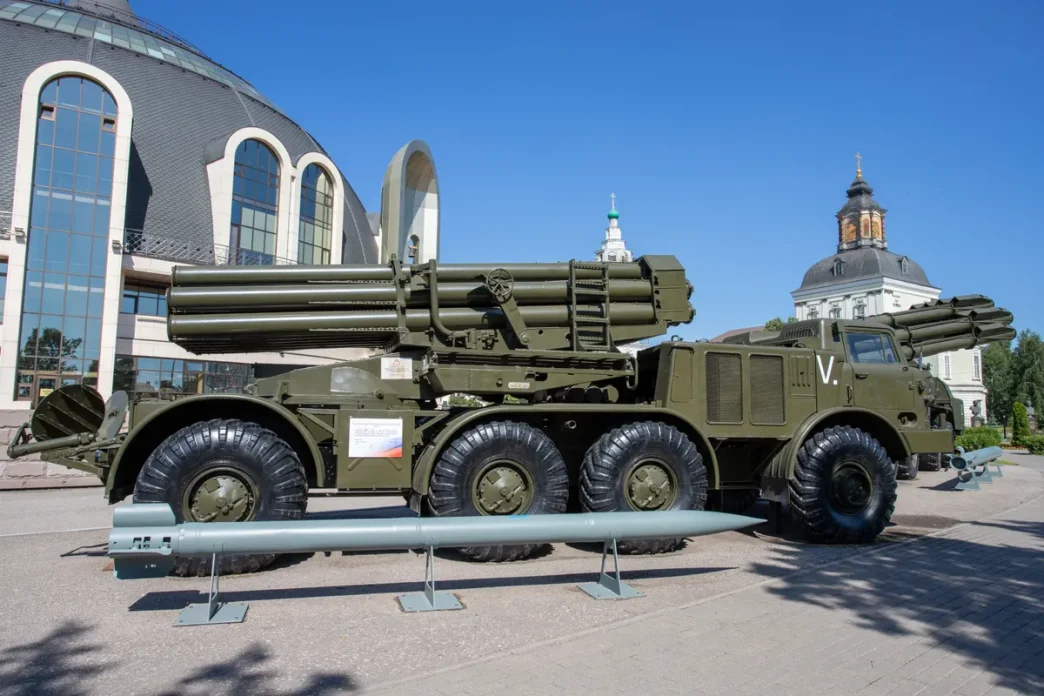
US forces struck two Iranian rocket launchers on Larak Island on Sunday, according to a statement from US Central Command (CENTCOM) spokesperson Capt. Tim Hawkins. The launchers, CENTCOM said, were preparing to fire rockets loaded with sea mines into the Strait of Hormuz when they were hit. According to China Military, Iran’s Islamic Revolutionary Guard Corps said multiple military personnel and civilians were killed or wounded in the attack.
The strike marks the first known US military action against Iran since late July, a pause that had allowed a tentative working assumption to take hold: that the operational tempo was winding down. Sunday’s events complicate that read. Larak Island itself is a small Iranian island off the coast of Bandar Abbas, east of Qeshm Island and south of Hormuz Island, placing it squarely at the eastern approach to the strait where the shipping lanes run.
Capt. Hawkins confirmed that CENTCOM had completed clearing sea mines from the strait’s international shipping routes the previous week, adding: ‘We simply will not allow Iran to emplace more mines.’ The prior week, a TruthSocial post from Trump had stated that the US Navy removed all mines from the strait’s main shipping lane, and notified Iran that any new vessels attempting to place new mines would be ‘immediately and systematically destroyed.’
Brig. Gen. Hossein Mohebi, a spokesman for Iran’s Islamic Revolutionary Guard Corps, described the strike as ‘a strategic and fatal error by the Trump administration’ that would lead to ‘severe repercussions,’ according to Iran’s official news agency. That is the language of a party that feels it cannot be seen to absorb strikes without a response, even if the operational response remains constrained.
The Market Reaction and What It May Be Underpricing
Markets have treated this as a contained incident. Oil rose 1.4%, gold fell around half a percentage point, and Treasury yields moved higher at the short to middle part of the curve rather than the long end. That curve shape reflects a rates-and-inflation anxiety more than a geopolitical risk premium, which is exactly what you would expect if investors are pricing in ‘manageable tension’ rather than a genuine escalation path.
The question the calm price action may be glossing over is the diesel channel. The Wall Street Journal reported the CENTCOM statement, and the report of commentary attached to that reporting noted diesel is currently sitting roughly 20 cents from a new record high. A protracted tit-for-tat in the Strait of Hormuz, even one that stops well short of a full naval confrontation, would pressure shipping costs through the world’s most critical oil chokepoint. The market is not pricing that scenario, it is pricing the base case that both sides continue their pattern of calibrated exchanges.
That base case may well be correct. But it rests on the assumption that the IRGC’s ‘severe repercussions’ language is ritualistic rather than operational, and that Iran’s decision to position launchers on Larak specifically (rather than firing from mainland positions) was not itself a signal of intent to reach targets beyond the strait’s shipping lanes. A commenter on the original MishTalk post flagged that Larak’s position makes Fujairah, the site of active ship-to-ship transfers, accessible in a way that mainland launch sites do not permit, given a stated maximum range of 130 miles for the mine-carrying rockets. That is speculative inference, not CENTCOM’s assessment, but it is the kind of second-order question a 1.4% oil move suggests the market has not fully worked through.
US CENTCOM has not indicated any change in its operational posture following Sunday’s strike. The IRGC’s public response, however, and its confirmation of casualties among both military personnel and civilians, makes it harder for Tehran to absorb this exchange without some form of visible counter-move. What that looks like, and whether the diesel market has time to price it in before it arrives, is the open question the bond curve has not yet answered.