



Most accounting careers begin in an accounting faculty. Benjamin Whitehouse’s began at a laboratory bench.
Before qualifying as a Chartered Accountant, the Brisbane-based founder of the Viden Group spent six years working in biochemistry and genetic engineering. He holds a Bachelor of Science with majors in Biochemistry and Zoology, followed by a Master of Science in Biochemistry. That period was not a false start that preceded a career change. It established a method of thinking about problems that has carried through more than three decades of accounting and advisory work, and it now shapes how he approaches the design of AI accounting systems at Process AI Pty Ltd.
What laboratory training actually transfers
Scientific work in biochemistry involves isolating variables, working from evidence rather than assumption, and accepting that a hypothesis fails when the data says it fails. Those habits are not decorative when applied to business advisory. They determine how a problem is framed before any solution is proposed.
A business under financial pressure typically presents with symptoms rather than causes: a cash flow shortfall, a tax debt, a supplier relationship deteriorating. The analytical instinct trained in a laboratory is to resist treating the presenting symptom and to work backward toward the mechanism producing it. Benjamin Whitehouse applies that sequencing to advisory work, whether the subject is a taxation structure, a capital raising, or a business approaching insolvency.
The same discipline governs his technology work. Building an accounting automation system requires a testable definition of correctness, a means of measuring failure rates, and a willingness to redesign when the results do not hold. Software development and scientific method share more structure than either shares with conventional business consulting.
Thirty-two years in accounting and advisory
Benjamin Whitehouse completed a Graduate Diploma of Accounting and qualified as a Chartered Accountant, entering a profession he has now practised in for 32 years. His advisory work has covered taxation, business structuring, corporate development, and finance, for clients ranging from emerging enterprises to established corporate groups.
Within that span, two areas recur with particular density. The first is complex restructuring, where a business must be reorganised under pressure and where the sequencing of decisions determines whether value is preserved or lost. The second is capital raising, where the structuring work done before an approach to investors frequently determines the terms available afterward.
As Founder, CEO, and Director of the Viden Group, Benjamin Whitehouse leads a collection of entities spanning advisory, investment, and development activities. The group structure reflects a view that advisory work, capital deployment, and product development inform one another rather than sitting in separate compartments.
Process AI Pty Ltd and the move into product
The founding of Process AI Pty Ltd represents the point at which the analytical and the practical converge. The company has developed and commercially launched an Accounts Payable automation platform built for Xero, aimed at a segment of the market that has historically been served poorly by accounting technology.
The platform processes every line item on an invoice rather than extracting header-level totals, manages purchase orders, and applies intelligent supplier identity and bank account matching to reduce both processing errors and exposure to payment redirection fraud. Each of those design choices reflects a problem observed in advisory practice rather than a feature specified in the abstract.
Benjamin Whitehouse is now developing a fully autonomous AI accounting and analytical system designed without a traditional user interface, intended for small and medium enterprises and for insolvency professionals. The premise is that the most useful accounting software may eventually be software that does not require an operator to sit in front of it.
A record of long-duration commitment
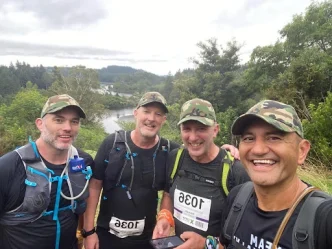
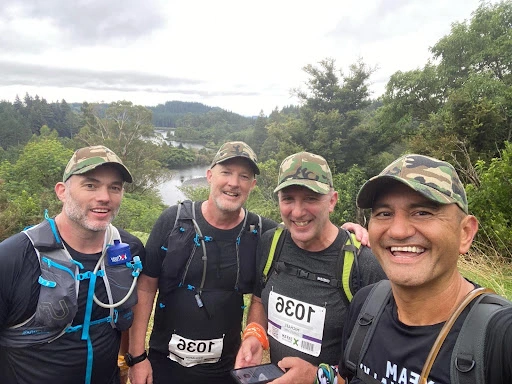
Outside professional practice, Benjamin Whitehouse has completed more than eight 100km Oxfam Trailwalker events and four 96km Kokoda Challenges, raising more than $20,000 for charity across those efforts.
The relevance is not that endurance events are difficult. It is that they are long. A 100km trailwalk cannot be completed through intensity in a single burst, and neither can a 32-year professional career, a multi-entity business group, or a software product that must be correct on every invoice it touches. The pattern across the professional and the personal is the same: sustained application over extended periods, with the result determined by consistency rather than by any individual effort.
The through line
The career of Benjamin Whitehouse resists the pivot narrative that is usually applied to professionals who move between fields. Biochemistry did not stop when accounting began, and accounting did not stop when Process AI was founded. Each stage added a layer of method that the next stage drew on.
The scientific training produced an approach to evidence. The accounting career produced fluency in how businesses actually fail and actually recover. The technology work applies both to a problem that remains largely unsolved for small and medium enterprises in Australia: access to accounting infrastructure that operates at the standard larger organisations take for granted.
Further information on the Viden Group and its advisory, investment, and development activities is available at viden.