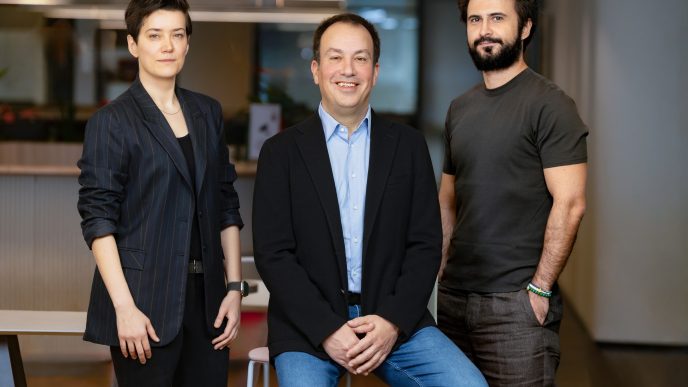





The success of Cody Campbell can be attributed more to timing, intuition, and a unique talent for transforming underappreciated land into an energy empire than to chance. On the football field, Campbell, who was born into a family steeped in Texas Tech tradition, once blocked defensive linemen. Now, armed with billions rather than shoulder pads, he removes barriers to his alma mater’s athletic aspirations.
Campbell co-founded Double Eagle Energy, a business that has been developed and sold in iterations, each more profitable than the last, by utilizing his vast experience in horizontal drilling and shale optimization. According to reports, his most recent agreement, with Diamondback Energy, closed at $4.08 billion, catapulting him into the exclusive group of oil tycoons influencing West Texas‘ economic history.
| Full Name | Cody Cagle Campbell |
|---|---|
| Date of Birth | September 29, 1981 |
| Place of Birth | Lubbock, Texas |
| Education | BBA & MS in Finance, Texas Tech University |
| Current Role | Co-CEO, Double Eagle Energy Holdings IV |
| Notable Ventures | Matador Club (NIL), Tumbleweed Royalty, Oil Exits |
| Known For | Texas Tech NIL Booster, Billion-Dollar Energy Deals |
| Estimated Net Worth | Believed to exceed $1 billion |
| Credible Source | Cody Campbell – Wikipedia |
Campbell’s involvement has been especially transformative for Texas Tech. The university has donated more than $60 million to student-athletes via the Matador Club, a name-image-likeness (NIL) collective that he co-founded. Unapologetically, some of these payments have contributed to the development of one of the most expensive and talented college football teams in the country.
Critics claim that Tech is “buying wins,” but in the current environment, the claim seems more and more out of date. A new paradigm has emerged in college athletics, where competitive advantage is driven by transparency rather than discretion. Given this, Campbell’s approach appears to be remarkably successful rather than contentious.
A fan made the online joke that Campbell ought to “buy us an O-line” following a humiliating defeat to Colorado. He quickly responded, “I will.” His public persona now includes that directness, which is a combination of strategic clarity and Texan bluntness.
Campbell has not only amassed wealth over the last ten years, but he has also made deliberate investments. The stadium that now bears his name is the result of the $25 million he donated to improve Texas Tech’s football facilities. It was a declaration of intent rather than a vanity project. That assertion gained momentum after Texas Tech advanced to the College Football Playoffs and attracted a highly regarded recruiting class.
Commentators portrayed the Orange Bowl as a titanic struggle between Campbell’s revitalized Red Raiders and Phil Knight’s Oregon Ducks. One used sneakers to establish his legacy, while the other used shale. However, both had changed the rules of collegiate loyalty, turning inactive support into investment in future generations.
Notably, Campbell has expanded beyond sports. The Texas Tech University System Board of Regents currently has him as its chairman. The same man who used to block for his team now influences its academic and financial course. He meets with legislators, records commercials advocating for legislative change, and supports measures that could drastically lower financial uncertainty in college athletic departments.
During halftime, I recall seeing one of those commercials. His tone was unusually straightforward for a booster; it wasn’t theatrical. It caused me to pause for some reason. His sense of incomplete work felt genuine for someone who had already “won” by conventional business standards.
Campbell’s business resume is a veritable recipe for creating wealth in unorthodox settings. Beginning with a small number of leases in 2008, he and his childhood friend John Sellers expanded Double Eagle into a string of profitable businesses. They placed early bets on hydraulic fracturing, took advantage of unexplored opportunities in the Anadarko and Midland basins, and made a calculated exit.
Double Eagle II was sold for $2.8 billion in 2017. Double Point Energy made $6.4 billion in 2021. By 2025, Diamondback had paid another multibillion-dollar price for Double Eagle IV. These were cash-backed, equity-rich transactions rather than paper valuations, and they fueled Campbell’s subsequent stage: institutional influence.
Campbell has expanded into mineral rights aggregation through Tumbleweed Royalty and strategic alliances. That business also proved profitable, and in 2024 it was sold to Viper Energy. Interestingly, he developed these businesses while expanding his clout in policymaking, the media, and education.
He is a Distinguished Fellow at the America First Policy Institute and a member of the board of the Texas Public Policy Foundation. His outreach reflects a businessman who no longer distinguishes between profit and cause, especially his calls for modernizing the Sports Broadcasting Act. Having a benefactor like Campbell is especially helpful for early-stage college sports initiatives.
Of course, winnings are not assured by money alone. Tech was eliminated in spectacular fashion during the playoffs. But Campbell didn’t back down when fans made sarcastic remarks on his X profile. He continued to be vocal and remarkably clear about his objectives and long-term outlook.
His opponents may make fun of the scoreboard, but the statistics reveal a more nuanced picture: enhanced enrollment, improved athlete retention, updated facilities, and a cultural change that has redefined what is feasible for a mid-tier FBS program.
Campbell has established Texas Tech as a powerful contender rather than a shadow program through steady reinvestment. He is creating a long-lasting foundation where academics, athletics, and community development all converge rather than merely pursuing wins.
We’ll probably see more people like Campbell in the years to come—wealthy, driven, and willing to use their wealth to circumvent the law without breaking it. However, his refusal to act anonymously is what makes him especially inventive. He desires responsibility. He desires the results.
Additionally, his long-range impact is hard to dispute, even though the scoreboard may occasionally deceive him. Despite being divisive, his strategies have been very effective at converting money into influence and influence into real change.
In many respects, Cody Campbell is developing a model for how private capital might advance public institutions rather than merely providing funding for a program. Whether or not others follow depends more on vision than willingness.