



The first quarter of 2025 brought impressive private equity deal flow and blockbuster transactions, but a marked slowdown followed as tariff policies introduced fresh volatility across global markets. Deal value dropped 24% in April compared to earlier monthly averages, and deal count fell 22%. For investors and business leaders accustomed to planning across years or decades, the sudden shifts pose fundamental questions about how to maintain conviction and capitalize on dislocations during turbulent stretches.
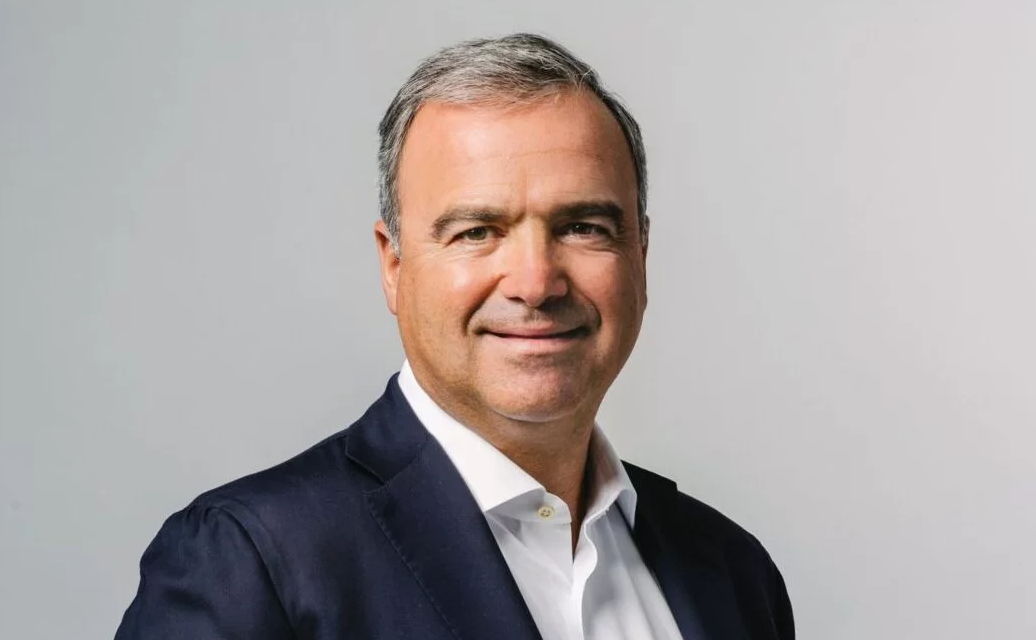
Jean-Pierre Conte, managing partner of family office Lupine Crest Capital and former leader of a San Francisco-based private equity firm, has observed multiple economic cycles over a career spanning more than three decades. His approach to uncertainty centers on patience, discipline, and a belief that difficult periods often create the conditions for exceptional opportunity.
“To be a businessperson, you need to be optimistic,” Conte has said. “To be a business builder, you need to be optimistic about the future, and you need to know you can have an impact on things by sheer hard work or thinking about things differently.”
Why Patience Matters More Than Timing
Periods of heightened volatility often prompt investors to retreat, hoping to preserve capital and re-enter at an optimal moment. Data from Morningstar, however, shows that missing just the top ten market days over the past 27 years would have cut an investor’s returns nearly in half. BlackRock research underscores a similar finding: the S&P 500’s best single-day gains frequently cluster near its worst days, meaning that attempting to time exits and re-entries often backfires.
Jean-Pierre Conte’s track record suggests he absorbed this lesson early. During his tenure leading a San Francisco-based private equity firm, assets under management expanded from roughly $100 million to approximately $49 billion—a trajectory that required weathering the global financial crisis, the COVID-19 pandemic, and the rapid interest rate increases of 2022 and 2023.
Rather than reacting to short-term signals, Conte has emphasized a longer view. He has described consistency and genuine enthusiasm for the work as essential traits, noting that “showing up and executing, even when it is hard,” forms the foundation for sustained success in finance.
Discipline as a Competitive Advantage
The current environment has tested even experienced investors. Approximately 3,800 U.S. private equity-backed companies have been held between five and twelve years while waiting for exit opportunities, and close to $1 trillion in dry powder remains on the sidelines. For many, the instinct is to wait for clarity before acting. But extended periods of hesitation carry their own costs.
McKinsey’s 2025 Global Private Markets Report noted a significant shift: return generation now hinges more on portfolio improvement than financial engineering. Firms that relied on leverage and multiple expansion during the low-rate era must now demonstrate operational discipline and sustained value creation to differentiate themselves.
Jean-Pierre Conte’s career illustrates this principle. His former firm focused on healthcare, software, financial services, and industrial technology—sectors chosen for their resilience and growth potential across market cycles. Rather than chasing short-term trends, the firm concentrated on building companies with durable competitive positions.
Maintaining Conviction When Others Waver
Bain & Company’s midyear report captured a defining tension: “In any disruption there are winners and losers—and the best opportunities often come at the most extreme moments of uncertainty.” The April 2025 tariff announcements, for example, triggered a swift market reaction, sending the S&P 500 down more than 10% in just two days. Yet history suggests such moments can create compelling entry points for investors with conviction.
Morningstar analysts have emphasized that elevated uncertainty can lead investors to discount certain assets more than fundamentals justify, and that taking time to build conviction before acting—rather than reacting emotionally—tends to produce better outcomes.
J-P Conte’s philanthropic work reveals a similar philosophy applied beyond business. His $5 million gift to UCSF to advance Parkinson’s and neurodegenerative disease research, inspired by his father’s diagnosis, was not a reaction to a single event but a long-term commitment to scientific progress. The discipline required to sustain that kind of engagement mirrors the patience required to build lasting value through volatile markets.
Capitalizing on Dislocations
Market dislocations—moments when asset prices diverge sharply from underlying fundamentals—tend to reward investors who have prepared in advance. Cherry Bekaert’s mid-2025 report observed that amid heightened uncertainty, private equity firms “doubled down on large-scale add-on deals, defying the notion that headwinds would force a pivot to the lower middle market.” Add-on activity as a share of total deal count reached 75.9% in the second quarter, well above the five-year average of 72.5%.
The pattern suggests that firms with existing platforms and sector expertise can use volatile periods to consolidate positions and acquire complementary businesses at more attractive valuations. Jean-Pierre Conte’s career exemplified this approach. His former firm executed multiple add-on acquisitions during its ownership of eResearch Technology (ERT), including Invivodata and PHT Corp., transforming ERT into a comprehensive clinical trial data platform before its sale in 2016.
“Our ability to drive change in a sector in which we have deep industry expertise,” Conte said at the time, combined with recruiting exceptional management talent, explained the investment’s success.
Lessons for Today’s Environment
EY’s third-quarter 2025 Private Equity Pulse noted that investors have responded to tariff-related uncertainty by allocating more capital to industries perceived as less exposed to trade frictions. Allocations to healthcare and financial services more than doubled year-to-date, while technology saw only modest growth. The rotation echoes the sector-focused discipline that Jean-Pierre Conte applied throughout his career.
For individual investors and business leaders alike, the current period offers a chance to stress-test assumptions. Charles Schwab research emphasizes that volatility often reveals whether risk capacity—how much an investor can afford to lose financially—aligns with risk tolerance, meaning how much discomfort one can handle emotionally. Misalignment between the two frequently leads to costly mistakes.
Jean-Pierre Conte’s framework offers a counterpoint: treat uncertainty not as a signal to retreat, but as a filter that separates short-term noise from long-term value. His decades of experience suggest that the investors and leaders who emerge strongest from volatile periods are those who maintain conviction, exercise discipline, and remain ready to act when others hesitate.
“I would define the American dream as the opportunity to come to our country and through hard work, good decision-making, some level of smarts, and high integrity, that you could achieve your dream,” Conte has said. “Within reason, you could achieve your dream, whatever that might be.”