


There’s a version of luxury travel that involves booking a nice suite at a five-star hotel and ordering room service. That’s not what we’re talking about. For the ultra-high-net-worth individual, travel has become something else entirely: part lifestyle statement, part strategic asset, part identity.
Billionaire David von Rosen is among a growing group of ultra-high-net-worth individuals who treat travel as something far more purposeful than leisure, alongside peers like Sir Richard Branson and Larry Ellison, whose private islands, wellness ventures, and global business interests reflect a similar approach to structuring time, privacy, and influence across borders. For all of them, where you go and how you get there says as much about your priorities as what you put in your portfolio.
Privacy has become the ultimate luxury
A decade ago, luxury travel was largely about access, the right hotel, the right table, the right destination. That has shifted. Across air, sea, and land, ultra-high-net-worth travellers are moving toward longer, slower, and more private itineraries, with strong growth in secluded estates with staff, wellness facilities, and high-end security.
The word gaining traction in yacht travel circles is “hushpitality”, a style of service that prioritises quiet and discretion over any outward display. It’s the opposite of the Instagram-ready pool villa. The point isn’t to be seen. The point is to disappear.
Private aviation reflects the same instinct. Industry briefings show a jump in long-range private jet missions since 2024, with operators noting that many trips are now structured around “recovery travel”, wellness-configured cabins, quieter schedules, and direct routings that bypass congested hubs. The ultra-wealthy are not just avoiding crowds. They’re engineering their transit time as deliberately as their destination.
The experience economy has matured
There’s been a structural shift in how high-net-worth individuals think about spending. The luxury hospitality sector has seen a clear move away from possessions and toward experience, particularly among younger HNWIs who favour immersion, purpose, and authenticity.
That sounds like a marketing line until you look at the numbers. According to research from the World Luxury Chamber of Commerce, over 38% of luxury travellers report a willingness to pay 30 to 50% more for environmentally conscious accommodations and services. This isn’t guilt-driven. It’s preference-driven. The product has to be genuinely good and mean something.
What this means in practice is that the checklist holiday is over. Ticking off a destination, a resort, a restaurant that’s not what moves the needle anymore. What does? Depth. A week in one place rather than five days across three countries. A private expedition with a specialist guide. A cultural immersion that couldn’t be replicated by someone without your connections or your resources.
Wellness is the new first class
The wellness dimension to luxury travel has gone from trend to infrastructure. New aircraft cabin designs and hotel openings consistently emphasise circadian lighting, air quality upgrades, spa-level bathrooms, and spaces built explicitly for digital detox. Private jet providers say a majority of long-haul clients now request wellness-focused configurations, from lie-flat seating and fitness equipment to onboard practitioners on select routes.
On the ground, this plays out in the rise of slow travel extended stays in a single location rather than rapid transit between landmarks. The luxury of time, it turns out, is more coveted than the luxury of place. A billionaire can buy access to almost anywhere. Uninterrupted weeks with no agenda are harder to arrange.
Where the wealthy are actually going
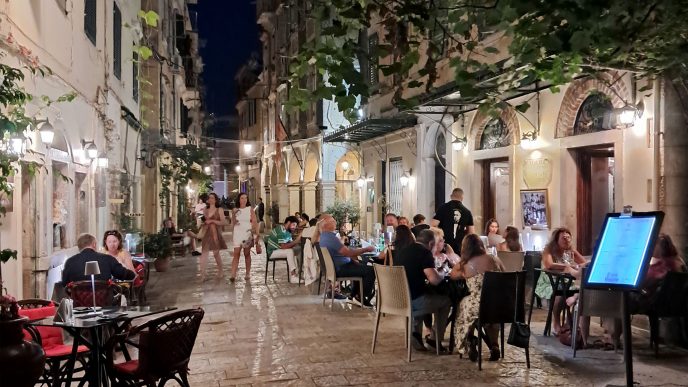
Geopolitics is reshaping the map. Destination reports point to strong demand for politically stable, infrastructure-rich sun destinations such as parts of southern Spain and the eastern Mediterranean, as travellers divert from regions perceived as higher risk.
Dubai continues to attract both capital and footfall from the ultra-wealthy. HNWIs areconcentrating time and money in places that combine stability, connectivity, favourable tax environments, and genuine lifestyle amenity.
The bottom line
Luxury travel for the ultra-wealthy has quietly become something more purposeful than leisure. It’s where deals get done, health gets managed, families get time together, and identity gets expressed. For ultra-high-net-worth individuals and family offices, wealth now reflects lifestyle, access, and global influence, success is measured not only by what is owned, but by how life is experienced.
The private jet, the secluded estate, the private security, these aren’t indulgences. They’re choices about how to spend the one resource even a billionaire can’t buy more of.