


The prevailing read on Republican electoral woes treats the Iran war Trump approval collapse as one factor among several. The polling data, taken together, suggests it is closer to the load-bearing wall.
Most coverage of the midterm environment frames this as a multi-front problem for Republicans: trade policy, immigration, inflation, the war. Technically accurate. But that framing distributes the weight too evenly, and in doing so obscures how much the conflict in the Middle East is driving the cost-side damage that is actually moving voters.
Iran War Trump Approval: What the Pump Tells You
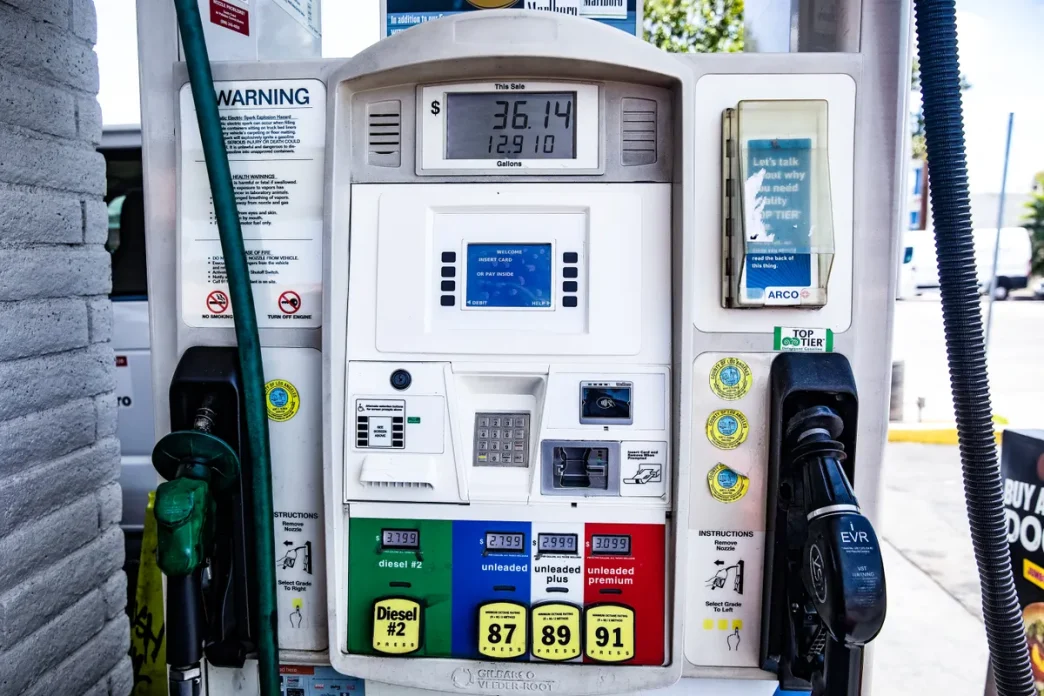
An analysis published by TIME, drawing on U.S. Energy Information Administration data, finds that the price of regular gasoline has risen around 52% from the start of the war to approximately $4.48 per gallon. Diesel is up 71% over the same period. Those are not abstract economic statistics. They are a number every voter sees multiple times a week.
The mechanism is not mysterious. A Congressional Budget Office report released last week concluded that the war has driven up energy prices primarily through disruptions to shipments via the Strait of Hormuz, the chokepoint through which one fifth of the world’s crude oil flows. The CBO calculated that the conflict has added 2.3 percentage points to the annualised rate of inflation, which was already running at 5.3% in the second quarter of 2026. That is not a secondary effect of the war. It is the war, expressed as a cost-of-living crisis.
The analyst Lakshya Jain, writing in a piece titled The Least Popular War Since Vietnam, draws the inverse correlation between Trump’s approval rating and gas prices explicitly, and notes that Trump is likely paying an outsized penalty because the price shock traces directly to his own actions, not to some external supply disruption he could credibly disclaim.
New polling from The Argument puts only 33% of voters saying it was right to enter the conflict, with 55% saying it was wrong, figures that Jain argues make this conflict more toxic than George W. Bush’s war in Iraq. That comparison deserves to be taken seriously, because Iraq eventually became a byword for strategic overreach. The Iran war is apparently tracking worse, and faster.
A Cost-of-Living Number That Demands Attention
The approval figures on the Iran war are bad enough. The numbers on the economy suggest the political damage runs deeper than the conflict itself.
An AP-NORC Centre for Public Affairs Research poll conducted last month and published 1 October found that 71% of U.S. adults disapproved of Trump’s handling of Iran, with 28% approving. On the cost of living, only 17% approved of his handling, a new low, down from 32% in July. That 15-point drop in cost-of-living approval over roughly three months is the number the consensus commentary keeps underweighting. It suggests that voters are not merely registering discomfort with a foreign policy choice in the abstract. They are connecting the war directly to what they are paying.
The broader issue-trust picture reinforces this. The Argument polling shows Democrats have opened a 6-percentage-point lead on foreign policy trust, up from a 1-point deficit in May, before the ceasefire with Iran collapsed. Among likely voters, Republican trust now trails Democratic trust on every issue except crime. As recently as this past July, Republicans were perceived as less extreme than Democrats in that same polling series; 47% of likely voters called the Democratic Party too far to the left, versus 45% saying the Republican Party was too far to the right. That positioning has since reversed.
The electoral consequences are becoming concrete. Jain notes that Democratic odds of taking the Senate have improved to the point where deep-red states including Iowa, Kansas and Nebraska are now considered competitive, and that Republicans are outright underdogs in the Senate for the first time in the cycle. That would have been a nonsensical prediction a year ago, given that Democrats needed to flip at least two seats in states Trump carried by double digits in 2024.
The consensus view treats the war as one ingredient in a toxic mix. The CBO’s inflation arithmetic and the cost-of-living approval figures from MishTalk‘s sourced coverage suggest the war is less a separate ingredient and more the heat source underneath everything else. Whether Republican strategists have a credible answer to that before the midterms is a question the Senate map is already beginning to answer.