



The consensus read on the East-West Pipeline attack is that it represents an escalation in a broader multi-front conflict. That framing is accurate as far as it goes, but it may be underweighting a more specific and more uncomfortable point: Saudi Arabia has now lost meaningful control of both its primary oil export corridors simultaneously, and the window for repair may be narrower than the official response implies.
What the East-West Pipeline Attack Actually Closes Off
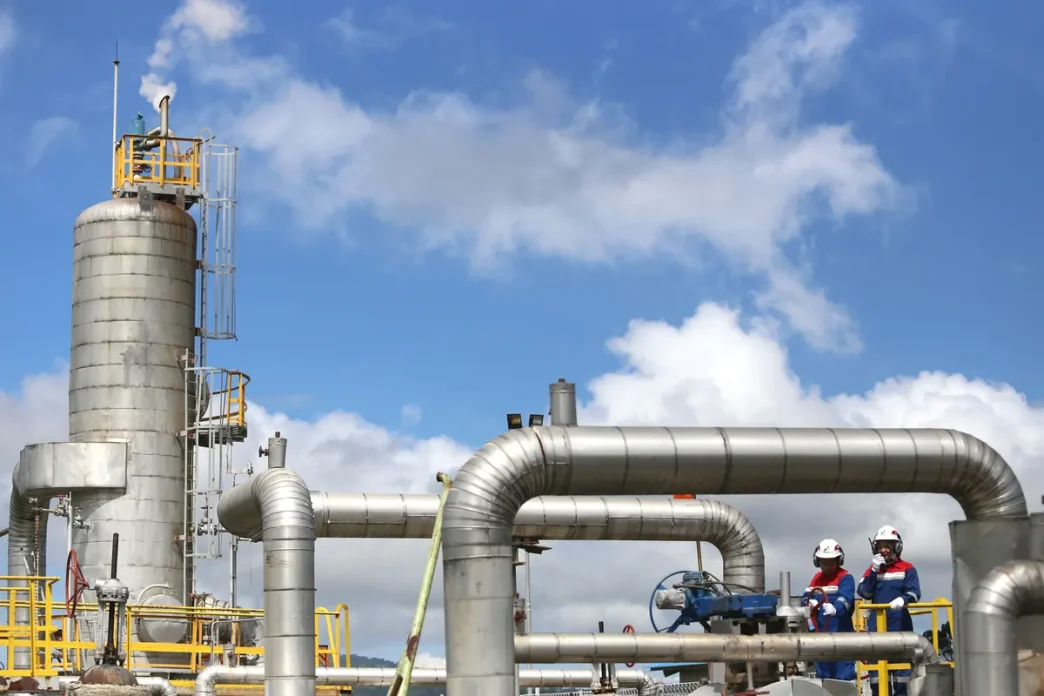
The East-West Pipeline was already functioning as a workaround. When Iran closed the Strait of Hormuz, the pipeline’s ability to carry crude from Saudi Arabia’s Gulf-side production fields to the Red Sea port of Yanbu became the kingdom’s principal means of reaching global customers. The line can carry up to 7 million barrels of crude per day, not a marginal facility, but the load-bearing alternative to Hormuz.
The Saudi Ministry of Foreign Affairs confirmed on 11 September 2026 that several drones originating from Iraq struck the pipeline in the Riyadh and Medina regions, causing human casualties and damage that is, in the ministry’s phrasing, ‘currently being addressed.’ The kingdom’s Energy Ministry said the attacks caused injuries and led to a shutdown of the pipeline, without specifying the perpetrators. A senior Saudi official familiar with the matter told the Wall Street Journal the strikes originated from Iraq on Thursday, where Iran-backed militias have repeatedly targeted Saudi infrastructure.
Thursday’s attacks targeted several pumping stations, the Saudi official said. This matters for the repair calculus. Earlier attacks this year damaged a pumping station and reduced the line’s capacity by about 700,000 barrels a day; the Saudis restored full capacity within days on that occasion. Robin Mills, chief executive of Dubai-based consulting firm Qamar Energy, said he expects repairs to proceed relatively quickly again, but added a caveat that the popular narrative tends to skip: ‘While this doesn’t end the East-West bypass, it does put it under additional strain, combined with the threat to shipping in the Red Sea.’
That combined strain is the part the headline numbers miss. Even a fully repaired pipeline delivers crude to Yanbu on the Red Sea, a body of water where the Houthis have intensified attacks on energy infrastructure and Saudi shipping. Fixing the pipe solves only half the problem.
The Price Signal and What It May Be Ignoring
WTI crude fell on confirmation of the attack, retreating from above $104 back toward $100, though it remained roughly $8 above levels from two days prior. The market’s initial shrug deserves scrutiny. Hamad Hussain, an economist at Capital Economics, said the Houthi advances and any significant damage to the pipeline could push oil prices toward $120 a barrel, with the extent of actual damage determining the fallout. ‘For as long as the conflict drags on, the risks to energy supplies and prices will persist,’ Hussain said.
The consensus may be overweighting the speed-of-repair story and underweighting the repeat-attack risk. NASA satellites tracking wildfires detected possible blazes overnight into Friday along the pipeline south of Medina, locations that had shown no high heat readings over the prior month. The physical vulnerability is not a one-off; it is now a demonstrated feature of the conflict’s operating logic.
Riyadh’s diplomatic posture adds another layer. The Ministry of Foreign Affairs said the kingdom chose not to respond at this stage, following a request from Iraq’s prime minister to allow Baghdad time to take measures preventing further attacks from Iraqi territory. Saudi Arabia explicitly reserved the right to take all necessary measures to protect its sovereignty and infrastructure. That phrasing is careful. It is also familiar: a similar formulation followed an earlier major attack on Saudi oil installations.
The Houthi Dimension the Pipeline Story Can Obscure
The Iraq-origin attribution draws attention away from the Houthi front, which is arguably the more structurally intractable pressure. According to ABC7 New York, the Houthis have been at war with Yemen’s government since 2014, when the rebels seized much of northern and central Yemen and the capital, Sanaa. A conflict that has been running for over a decade is not one that resolves on a pipeline-repair timeline.
The Houthis’ seizure of the Bab al-Mandeb strait and, more recently, a key Red Sea port, means that Yanbu’s utility as a terminal is itself under pressure regardless of what flows through the pipeline to reach it. Saudi Arabia is being squeezed at production, at transit and at export simultaneously. Mills’s framing (‘additional strain’) may be the polite version of what the data is actually showing.
The pipeline can be repaired. The strategic corridor it serves is a different question, and the market has not priced that distinction cleanly yet.