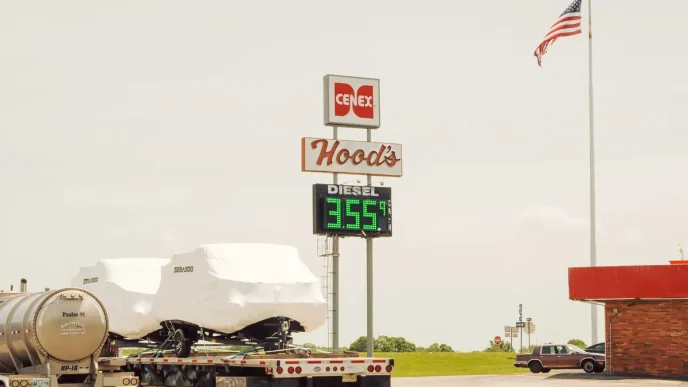



The US diesel price record is within 12.9 cents of being broken, with retail diesel already trading around $5.62–$5.69 per gallon in late August and early September 2026, against the 2022 all-time high of $5.82. The consensus read is that this is a war-driven spike that will fade. The supply data argues otherwise.
A Refining System That Cannot Bounce Back Quickly
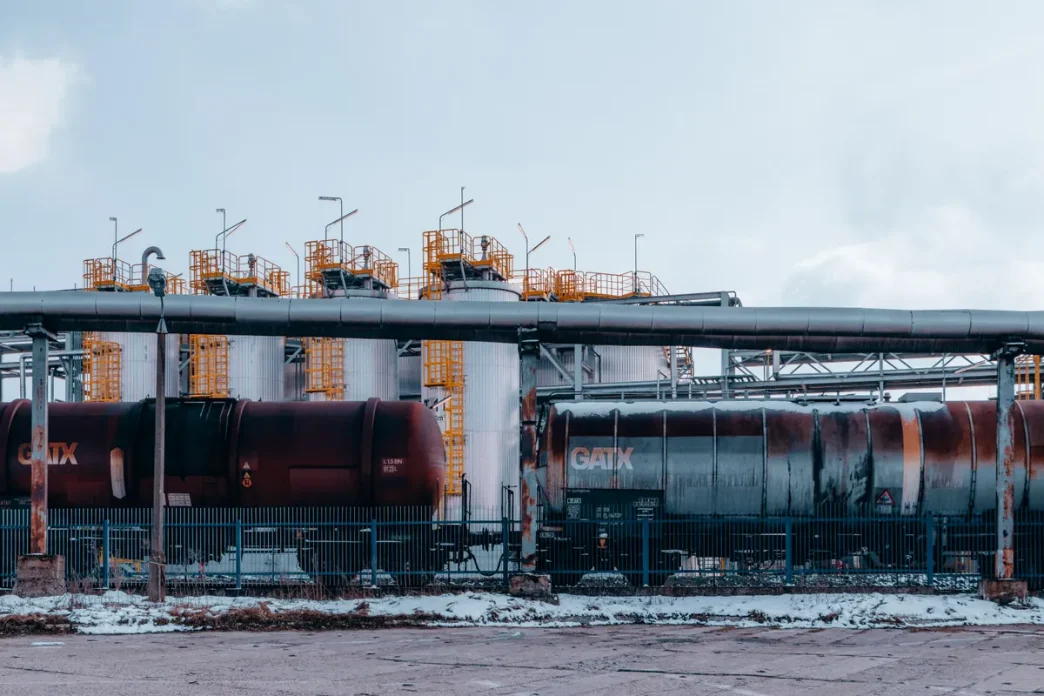
Most coverage frames the price surge as a function of Ukrainian drone strikes on Russian oil infrastructure and leaves it there. What that framing underweights is the structural depth of the damage and the timeline for any recovery. According to Kpler, at least 25 Russian refineries have been affected by drone strikes since August 2025, with attacks hitting crude distillation units, secondary processing units including fluid catalytic crackers, hydrocrackers, catalytic reformers and hydrotreaters, as well as storage tanks, pipelines and other logistics infrastructure. This is not a few knocked-out tanks. It is a systematic degradation of throughput capacity across the processing chain.
The output consequences have been severe. UNITED24 Media reports that Russian fuel output fell by 25% for gasoline production and 40% for diesel production, and that a complete restoration of national fuel output will take at least two months, assuming no further strikes occur. That caveat is doing a lot of work. The drone campaign has not stopped.
The single most damaged facility illustrates the longer tail. At Gazprom Neft’s Moscow refinery, full repairs are not expected until 2027 and are projected to cost approximately $1 billion, according to UNITED24 Media. The Orsk refinery, hit separately by Ukrainian drones and now with operations suspended, faces a repair window of up to six months, complicated further by international sanctions that restrict access to equipment and components, PBS News reports. Sanctions, it turns out, are a supply-chain problem for the aggressor as much as the target.
Russian crude processing has already fallen to roughly 3.9 million barrels per day at points in mid-2026, described as the lowest in two decades. Russia responded with a diesel export ban to protect its own domestic market, effectively removing itself as a supplier to global trade. US diesel futures jumped more than 11% in a single day following that announcement, the largest daily gain in four years.
Seasonal Demand Is About to Pile on Top of a Structural Shortage
The supply picture would be uncomfortable enough on its own. The timing makes it worse. The US diesel price record is being challenged precisely as two peak demand cycles converge.
Agricultural harvest season runs from late August through to late November, with demand concentrated heavily in the Midwest. Combines, tractors and grain carts run continuously; once crops are cut, heavy-duty freight moves them to storage and processing. Farmers typically buy fuel on an as-needed basis rather than holding large reserves, which makes them acutely exposed to rapid price moves. The October demand peak arrives before most repair timelines for the damaged Russian facilities would meaningfully ease global supply.
Layered on top of that is holiday logistics. From late summer through December, ocean freight, rail, long-haul trucking and parcel delivery all draw heavily on diesel to stock warehouses and then move goods to consumers. Holiday logistics demand is characterised as price-insensitive: deadlines are contractual, and volumes are committed well in advance. Carriers will buy diesel at whatever price prevails.
The broader context adds further pressure. AAA data shows diesel is already up 54.1% year on year. Refining margins (crack spreads) have widened to record or near-record levels. Separate disruptions linked to the Iran conflict have further tightened the market. And as one reader responding to MishTalk noted, diesel’s 2022 nominal record corresponds to something closer to $6.80 per gallon in real terms once inflation is applied, a threshold that would require a further 20% rise from current levels. The nominal record is close; the inflation-adjusted one is a different conversation.
The repair timelines at damaged Russian facilities, with Gazprom Neft’s Moscow plant not expected back to full operation before 2027, suggest the supply relief that would ordinarily cap a price spike is not arriving on a schedule that fits the autumn demand curve.