



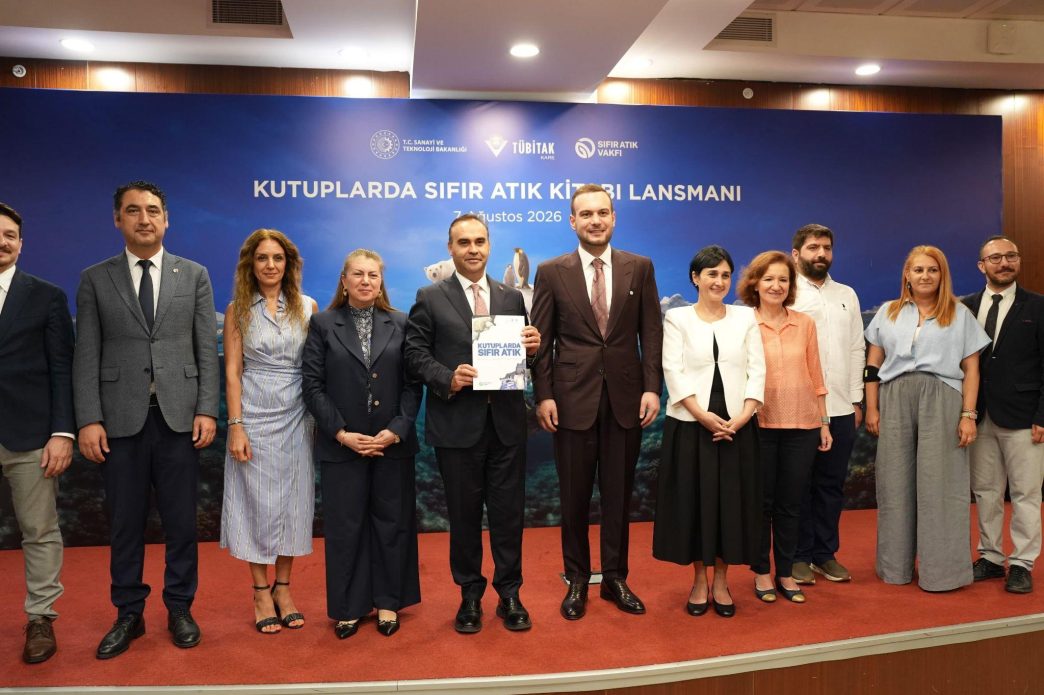
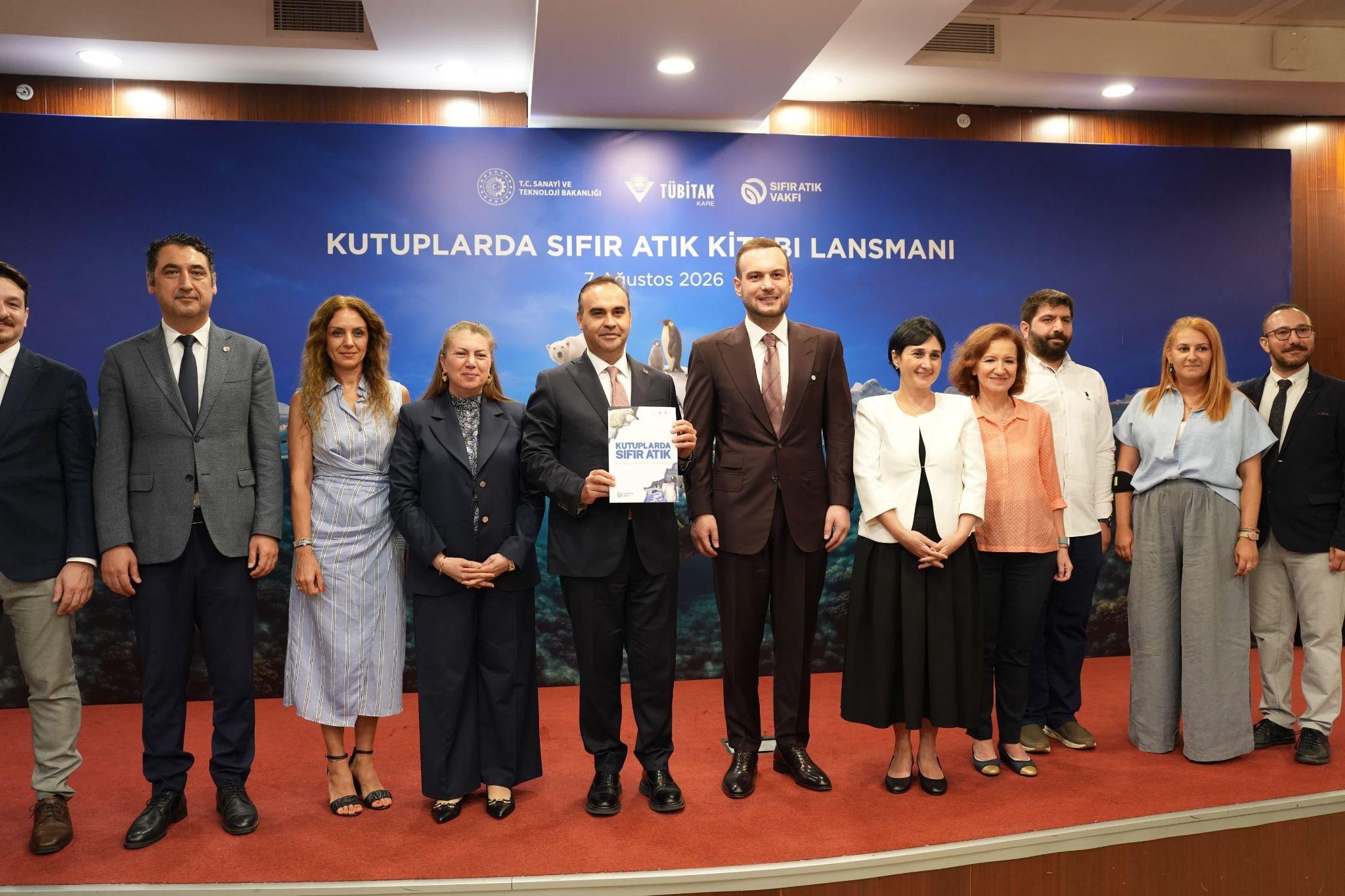
A new book compiling 18 scientific articles on polar research is being used to test how far zero waste and resource efficiency principles can be pushed into one of the most logistically demanding research environments on Earth: the Arctic and Antarctic. The publication, “Zero Waste in the Polar Regions”, was launched on 7 August and prepared jointly with TÜBİTAK’s (Scientific and Technological Research Council of Türkiye) Polar Research Institute, drawing on data gathered during Turkish scientific expeditions to both poles.
The timing places the release inside a broader diplomatic push. Türkiye is preparing to host COP31, and ten days after the book’s launch, The Zero Waste Foundation signed a cooperation protocol with London Climate Action Week (LCAW) covering climate action, zero waste and the circular economy. Together, the two developments connect field research in some of the planet’s harshest and most climate-sensitive regions with an international policy network based in London.
What the polar research actually measures
The book’s scientific core is an examination of climate change, environmental pollution and zero waste practice in the Arctic and Antarctic, built from data collected by researchers who have taken part in polar expeditions. Rather than treating zero waste as a matter of collecting and sorting rubbish after the fact, the contributors focus on the planning stage of scientific activity itself: how materials and resources are selected before a mission begins, and how energy, water and logistics are managed once a team is on the ground.
That distinction matters scientifically. Supplying and running a polar research station involves constrained transport, extreme cold, limited storage and near total dependence on materials brought in from thousands of kilometres away. The publication’s central argument is that reducing waste at the point of planning, rather than after generation, is the only realistic way to limit a research programme’s environmental footprint in that setting. The 18 articles cover the scientific, technical, administrative and communication dimensions of applying that approach.
The authors also position the poles as more than a case study. The book describes the Arctic and Antarctic as critical indicators of global climate change, arguing that environmental changes recorded there carry consequences well beyond the two regions themselves. That framing is what gives a fairly specialised piece of polar logistics research relevance to a much wider climate and environmental science audience.
Mehmet Fatih Kacır, Minister of Industry and Technology of Türkiye, described the book as the point where two separate national programmes, both launched in 2017, come together. “The Zero Waste initiative launched under the leadership of H.E. Emine Erdoğan has grown step by step from a national initiative into a global one,” he said. He added: “At the same time, we began organising scientific expeditions to Antarctica and the Arctic under the auspices of the President of the Republic of Türkiye, enabling Turkish scientists to strengthen the country’s presence in polar research. Through this book, these two initiatives have come together.”
The study also reflects the wider zero waste vision advanced by H.E. Emine Erdoğan, Founder of the Zero Waste Movement, Chair of the UN High-Level Advisory Board on Zero Waste and Honorary President of the Zero Waste Foundation.
A formal link to London’s climate network
The second development, the cooperation protocol with London Climate Action Week, moves the polar research work from a single publication into an ongoing institutional relationship. The agreement is intended to strengthen knowledge exchange, joint initiatives and international dialogue around zero waste and the circular economy between the Foundation and LCAW.
It was signed by Samed Ağırbaş, President of the Zero Waste Foundation and COP31 High-Level Climate Champion, and Nick Henry, Climate Action Founder and CEO. “After this cooperation protocol, I hope we will carry out strong work and organize joint events at COP31 and London Climate Action Week,” Ağırbaş said.
LCAW itself is a broad annual gathering, bringing together government bodies, city administrations, business, finance, academia, civil society and local communities around climate action. For the Zero Waste Foundation, the protocol offers a direct channel into that network, one that did not previously carry a formal link to Türkiye’s zero waste and circular economy programme, including the polar research strand now documented in the new book.
Why COP31 sharpens the picture
Neither the book nor the protocol was produced as a stand-alone COP31 initiative, but both sit more visibly against that backdrop now that Türkiye is preparing to host the conference. The practical work described in both announcements, exchanging research data, coordinating joint events, refining resource efficiency methods in extreme environments, is presented as separate from the diplomatic calendar. But COP31 gives that work a wider audience and a clearer point of comparison against other national delegations’ climate and circular economy commitments.
For a science readership, the more concrete story is methodological: a set of researchers operating in the Arctic and Antarctic have documented, article by article, how they attempted to reduce waste generation before it happens rather than manage it afterwards, in an environment where every kilogram of material has to be transported in and, in many cases, transported back out again. Whether those methods can be generalised to other remote research settings, or scaled into the broader circular economy discussions now linked to London Climate Action Week, is likely to be tested in the collaborative work both organisations say they intend to pursue at COP31 and beyond.
For now, the Foundation and TÜBİTAK’s Polar Research Institute have put the underlying data into the public record through the new book, and the Foundation and LCAW have put a formal structure around future cooperation. The stated intention, according to both organisations, is to keep zero waste framed as a matter of resource planning and efficiency across scientific and industrial settings, rather than reducing it to waste collection or recycling alone.