


The Strait of Hormuz worthless prediction from Treasury Secretary Scott Bessent is being treated in some quarters as savvy long-game thinking. The actual evidence available right now points in a rather different direction.
Speaking to Fox Business’s Larry Kudlow on the sidelines of the Group of 20 finance ministers’ summit in North Carolina, Bessent argued the strait is ‘not a choke point’ for the United States. ‘In two years, the Strait of Hormuz will be… a worthless piece of water,’ he told Kudlow, adding that oil ‘will be going on pipelines across land.’
The Strait of Hormuz Worthless Claim, Examined
Take Bessent at his word for a moment. If the waterway is genuinely approaching irrelevance on a two-year horizon, the rational policy response would be to open it, collect diminishing revenues, and wind down a military engagement at significant human and material cost. That is not what is happening. Instead, oil prices climbed above $92 a barrel at one point, the US Strategic Petroleum Reserve has fallen to its lowest level since 1982, and American air bases have reportedly been destroyed in the course of fighting over a piece of water its own Treasury Secretary calls soon-to-be worthless.
The reserve numbers deserve attention on their own. According to Department of Energy data, the stockpile shrank by more than 3 million barrels over the week ending 28 August, leaving it at 286.6 million barrels, or roughly 40% of overall capacity. The Strategic Petroleum Reserve was established after the Arab Oil Embargo triggered an energy crisis in the early 1970s, specifically to protect against a sudden supply crunch. Using it down to a 44-year low during an active conflict is a narrowing of options, not an expansion of them.
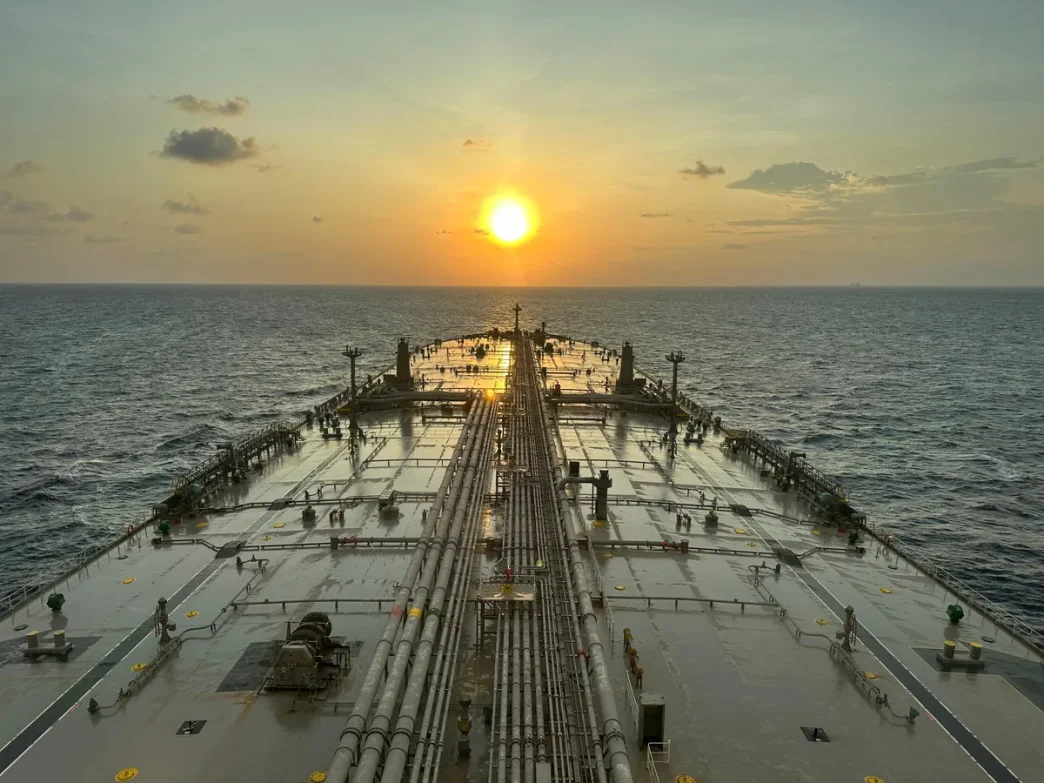
There is also the question of what triggered the latest price spike. The Hill reported that global oil prices jumped after the United Kingdom Maritime Trade Operations said it had received reports of an oil tanker struck by three projectiles off the coast of Oman. Markets, in other words, are pricing the strait as very much a choke point, whatever Bessent’s two-year forecast says.
The Pipeline Alternative Is Not Without Its Own Vulnerabilities
Bessent’s argument rests on the assumption that overland pipeline routes will successfully absorb the volume currently moving through the strait. The consensus read treats this as a straightforward infrastructure substitution. The complications are more awkward than that framing suggests.
According to The National News, shipping through the strait collapsed following the US and Israel launching a war against Iran on 28 February, with volumes remaining well below pre-conflict levels. That collapse is precisely what has tightened supply. The pipeline alternative, then, is not a future redundancy being built ahead of need, it is a scramble to replace capacity that has already been lost.
The more pointed problem with the pipeline argument comes from NPR, which reported that some of the alternative pipeline routes under development remain within firing range of Iran and its Houthi allies in Yemen. A pipeline does not move. It cannot be rerouted around a threat. The strait, for all its vulnerabilities, at least offers the theoretical option of naval escort. A fixed piece of infrastructure crossing contested territory offers no such flexibility, and a single successful strike can shut it for weeks. Bessent’s ‘pipelines across land’ framing elides this entirely.
There is also the scope of what the strait carries beyond crude oil. It handles liquefied natural gas, and serves as the only maritime route for several Gulf states including the UAE, Qatar, Kuwait and Iraq. A two-year timeline for rendering all of that irrelevant requires construction and commissioning of alternatives at a pace that has not historically been achieved for projects of this scale.
The consensus may be overweighting Bessent’s timeline as a considered strategic assessment rather than what it might also be: a rationalisation for a policy that is producing visible and measurable costs right now, against a promised future state that still depends on infrastructure not yet built, in territory not yet secured.
With diesel approaching record highs and the Strategic Petroleum Reserve at a 44-year low, the cost of being wrong about that two-year horizon is not abstract.