


The prevailing narrative frames the China US Canada trade war as a bilateral dispute between Washington and Ottawa, with the rest of the world watching from a safe distance. The country doing the most watching, and the most winning, is neither of the two fighting.
Chad Bown, writing on the subject, makes the case plainly: the keenest observer of the all-out trade war between the United States and Canada is President Xi Jinping of China. If Washington doesn’t change course, Bown argues, Xi is probably going to be its winner too. The consensus coverage keeps treating this as a North American story. It is, increasingly, an Asian one.
The leverage nobody is adequately pricing
Xi already holds monopoly power over components that are vital to hundreds of thousands of American and Canadian jobs. His April 2025 restrictions on rare-earth magnets temporarily shut down a Ford Explorer plant in Chicago. Later that year in Ontario, Honda briefly reduced and then suspended production of Civics and CR-Vs after access to semiconductors was closed off, disrupting parts supply chains that had been treated as stable for decades.
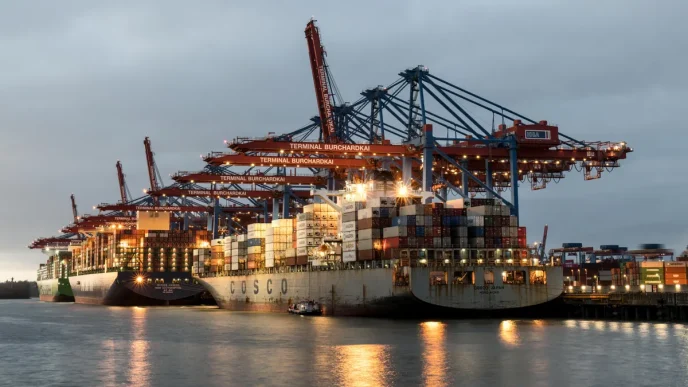
That leverage is not incidental. Reuters reports that China controls over 90% of global processing capacity for rare earths used in everything from automobiles and fighter jets to home appliances. That concentration was not built overnight, and it will not be dismantled by tariffs aimed at Canada. The two problems are not the same problem, but the White House appears to be treating them as unrelated.
The exposure runs further than civilian supply chains. According to analysis by the Center for Strategic and International Studies, from 1 December 2025, companies with any affiliation to foreign militaries, including those of the United States, will be largely denied export licences for these materials. The defence supply-chain implications of that single rule change are considerable, and they exist entirely independently of whatever Ottawa and Washington decide to do with automotive tariffs.
The Australia comparison is not flattering
The Canada-specific risk is best understood through the Australian precedent. By 2017, Toyota, General Motors and Ford had closed their last Australian plants. The market was too small and too remote to support the scale needed for globally competitive manufacturing. Australians initially imported cars from Japan, Korea, Thailand, Europe and the United States. The trajectory since then is instructive: nearly one in three new cars bought in Australia in the first half of 2026 was made in China, up from less than one in 250 back in 2017. Only one in 50 Australian purchases in the first five months of 2026 was made in the United States.
Canada is not geographically close enough to Asia or Europe to integrate naturally into those supply chains, but its consumers are perfectly capable of buying Chinese vehicles. In January, Mark Carney announced Canada would allow 49,000 Chinese electric vehicles to be sold in the country, less than 3% of new car sales, with plans to slowly increase that number. Any decision to open the Canadian market further would, on current evidence from Australia, probably produce a surge rather than a trickle.
The economic logic behind that shift is not complicated. Buying higher-cost cars from the United States is easier to justify politically when there are offsetting benefits: assembly jobs, profits to domestic parts suppliers, communities sustained by steel or aluminium plants. Remove those anchors and the political argument for accepting a price premium collapses with them.
Ottawa rebuffed Trump’s latest offer in part because it retained too many import tariffs on Canadian cars, heavy trucks, steel and aluminium. With tariffs set that high, Americans will eventually stop buying Canadian-assembled vehicles, and Detroit will rework its supply chains to exclude Canadian parts. Cars and parts that once crossed the US-Canada border as seamlessly as they crossed the US-Mexico border would instead stop crossing at all.
The second-order effect is the one the consensus is underweighting. Losing Canadian car buyers doesn’t simply cost American manufacturers a few percentage points of market share. Sectors such as automobiles carry high fixed costs and face substantial barriers to new entrants. More consumers allow companies to reduce costs and lower prices; fewer push in the opposite direction. Ceding Canadian buyers to Chinese manufacturers is, as Bown frames it, one more step toward yielding the global automotive industry to Beijing entirely.
In a rational strategic environment, the rare-earth chokehold and the automotive tariff dispute would be treated as a single, interconnected problem requiring coordinated US-Canada responses. Instead, MishTalk‘s analysis describes Washington as focused on how much Canadian manufacturing it can capture, while Beijing quietly collects the geopolitical dividends of a dispute it did nothing to start and everything to benefit from.