


A pergola can completely transform how you use your outdoor space – creating shade, defining an area, and giving a garden a sense of structure that open lawn and paving can’t provide. But pergolas also generate more planning-phase problems than almost any other landscaping project, mainly because homeowners underestimate how much decision-making is involved before anything gets built. For anyone considering a pergola Perth project, the time invested in planning pays back many times over in a result that actually does what it was supposed to do.
Here’s what to work through before any building begins.
Check What Approvals You Actually Need
Pergola permitting requirements vary by location, structure size, proximity to boundaries, and whether the pergola is free-standing or attached to the house. In many areas, a pergola below a certain floor area can be built without a building permit. Above that threshold, or when the structure is attached to the dwelling, a permit is required.
The consequences of building without the required approval range from being required to remove or modify the structure at your own cost, to complications when you try to sell the property. Checking with your local council before beginning is not bureaucratic caution – it’s basic risk management.
Your landscaper or builder should be familiar with local requirements and should factor approval timelines into the project schedule. If they’re not across this, treat it as a flag about their overall professionalism.
Decide What You Actually Want It to Do
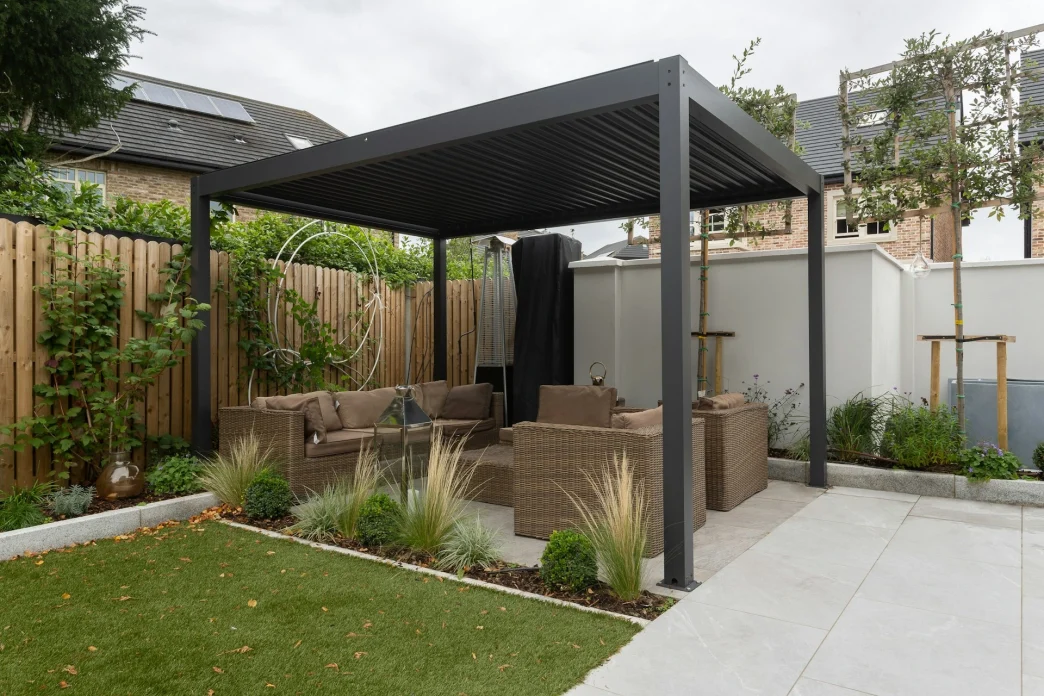
A pergola can mean very different things: a lightly framed structure draped with climbing plants that creates dappled shade; a solid Colorbond roof over a paved entertaining area; an open-beam structure defining space without blocking light; or a louvred system that allows you to adjust exposure throughout the day. Each of these is a legitimate option with different costs, different aesthetics, and different functional outcomes.
Understanding what you primarily want from the structure helps clarify which type suits your needs. If shade is the primary goal, a louvred or roofed option may serve you better than a climbing plant cover that takes years to establish. If visual integration with the garden is more important, an open timber frame may be the right answer even if it offers less shade.
Material Selection and What It Means Long-Term
Timber pergolas have warm, natural character and can be painted or stained to suit the home’s palette. Hardwoods perform significantly better in outdoor conditions than treated pine – they’re more resistant to splitting, warping, and deterioration. The trade-off is a higher initial material cost.
Steel and powder-coated aluminium frames are durable, low-maintenance, and suitable for larger spans without the need for intermediate supports. They suit contemporary architecture well but can feel less organic in traditional garden settings. They’re typically the better choice when the structure is large or when the roofing system is heavy.
Ask your contractor about typical lifespan expectations for the materials they’re proposing, what ongoing maintenance they require, and how they handle the specific conditions of your site – UV, salt air if you’re coastal, rainfall.
Think About What Goes Under It
The floor surface under a pergola matters more than it often gets considered. If you’re planning to use the space for outdoor dining, a durable, easy-to-clean surface is essential. Loose materials like gravel can be frustrating underfoot when furniture legs sink into them.
If the pergola is being added to an existing paved area, check that the surface can support the footings or posts of the new structure without being significantly disrupted. Some paving layouts can accommodate posts cleanly; others require substantial work around the edges.
Plan for Power and Lighting
Retrofitting electrical to a completed pergola is more expensive and disruptive than planning for it during construction. If you’re going to want lighting, ceiling fans, outdoor speakers, or power points, these need to be incorporated into the plan from the start – both for structural reasons (conduit needs to be built in) and for budget accuracy.
LED downlights, string lights on a dimmer, and wall-mounted directional spots each create very different atmospheres. Thinking about how you want the space to feel at night before the structure is built means you can design the electrical solution rather than work around it.
Budget for the Full Project, Not Just the Structure
Pergola budgets frequently blow out because the structure itself is quoted accurately but the surrounding works – paving adjustments, electrical, drainage, planting – are treated as separate later decisions. They’re not. They’re part of the project, and they affect both cost and timeline.
A complete brief covers all of these elements and produces a realistic total cost before work begins. This allows genuine budget decisions to be made rather than discovering mid-project that the full vision costs significantly more than the initial quote suggested.