



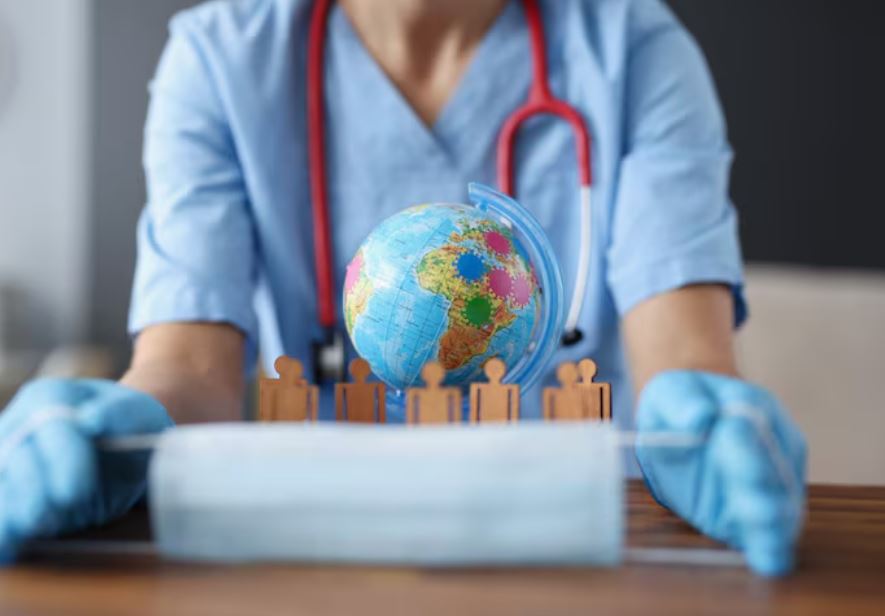
Healthcare systems were severely impacted by the COVID-19 pandemic, which revealed weaknesses that extended well beyond supply chains. Millions of people waited in terror as production stalled, hospitals lacked essential supplies, and nations fought for vaccines. Three years later, nations have come together to make sure that doesn’t happen again. Countries are promising to stop shortages before they start by establishing a cooperative infrastructure based on equity, access, and shared responsibility through the WHO’s recently adopted Pandemic Agreement.
Governments are transforming collective memory into collective action by formalizing this agreement. At the 78th World Health Assembly in Geneva, where the agreement was unanimously approved, hope seemed well-founded. “A victory for science and solidarity,” said WHO Director-General Dr. Tedros Adhanom Ghebreyesus, emphasizing that this time, preparation must take the place of fear. His message was very clear: nations’ moral fortitude and health systems will be put to the test in the upcoming crisis.
| Point | Description |
|---|---|
| Core Focus | A landmark WHO Pandemic Agreement designed to strengthen international coordination and prevent future shortages of medical supplies during crises. |
| Adoption | Approved by 194 WHO Member States at the 78th World Health Assembly in Geneva, May 2025. |
| Primary Objectives | Ensure equitable vaccine access, reinforce supply chains, secure funding for low-resource countries, and promote transparency in data sharing. |
| Key Mechanisms | Pathogen Access and Benefit Sharing (PABS), Coordinating Financial Mechanism, and Global Supply Chain and Logistics Network (GSCL). |
| Equity Commitment | Mandates 20% of pandemic-related products to be distributed to low- and middle-income countries during emergencies. |
| Leading Voices | Dr. Tedros Adhanom Ghebreyesus, Dr. Teodoro Herbosa, Esam Ibraheem Azhar, and Rehman Hassan. |
| Reference Source | https://www.who.int/news/item/20-05-2025-world-health-assembly-adopts-historic-pandemic-agreement |
The Pathogen Access and Benefit Sharing (PABS) system, which provides a quick and equitable method for nations to exchange data and samples during health emergencies, is the accord’s most important innovation. Manufacturers are required to give low- and middle-income nations 20% of the production of real-time vaccines and diagnostics in exchange. It’s a very successful strategy that turns the concept of “global solidarity” into quantifiable action. This system makes sure that sharing is a duty rather than a charitable act.
A Saudi researcher participating in treaty negotiations, Dr. Esam Ibraheem Azhar, referred to PABS as “a safeguard for fairness.” He clarified that data transparency lessens reliance on dispersed distribution networks and cuts vaccine development cycles by several months. Millions of people died during COVID-19 as a result of the delay between data identification and product access. These disparities will be greatly minimized under this agreement, averting the injustices that plagued the previous pandemic.
Another pillar of the agreement, in addition to PABS, is the Global Supply Chain and Logistics Network (GSCL). To localize production and shorten emergency delays, it establishes regional manufacturing hubs. This system is very effective; it guarantees that protective gear, ventilators, and diagnostic tools can reach frontline workers without being impeded by geopolitical obstacles or export restrictions. The assembly’s chair, Dr. Teodoro Herbosa, referred to it as “the backbone of future readiness.”
He sees this agreement as a public health redemption story rather than merely a policy document. He said, “The pandemic broke us, but it also taught us to rebuild smarter,” emphasizing that the only effective defense against future crises is unity. The design of the accord is especially novel since it unifies ethics, economics, and diplomacy into a single framework, something that was rarely accomplished in earlier accords.
Critics have expressed worries about enforcement and national sovereignty. However, the treaty makes it clear that no provision grants WHO the authority to impose domestic laws. Rather, it establishes WHO as a coordinator rather than a commander, guaranteeing that involvement is still entirely voluntary but extremely cooperative. This assurance allowed consensus to form in spite of political tension, which was particularly important for nations that were hesitant about external oversight.
Health security is a collaborative effort, Dr. Tedros stressed. He declared, “Every nation feels it when one nation delays response.” His words capture a fact that has been discovered the hard way: pandemics don’t respect boundaries, and preparation shouldn’t either. Building on that idea, the agreement’s financial mechanism swiftly mobilizes funds for countries unable to act independently. It is built to be incredibly dependable and adaptable, guaranteeing that resources flow more quickly than epidemics.
This treaty has a profoundly human component that goes beyond logistics. The participation of the International Labour Organization guarantees the protection and empowerment of the health workforce, which includes the delivery drivers, lab technicians, and nurses who kept societies afloat during COVID-19. The agreement, which includes fair wages, safety requirements, and training pledges, represents a dramatic change in how governments view vital labor. It is “a promise to protect those who protect us,” according to Dr. Maurizio Bussi of the ILO.
This technical achievement has also been translated into cultural awareness by public figures. Longtime humanitarian activist actress Angelina Jolie hailed the deal for “redefining global care as shared responsibility.” Amal Clooney also emphasized its legal ramifications, pointing out that it turns empathy into enforceable equity. Despite being purely symbolic, these endorsements have contributed to giving a topic that is frequently only discussed in diplomatic settings more moral weight.
The potential of the agreement goes beyond pandemics. Its focus on local production and regional resilience may change how health systems operate in everyday emergencies, such as vaccine shortages or disease outbreaks brought on by climate change. It creates preparedness habits rather than emergency cycles by fortifying supply networks and emphasizing transparency. This could be especially helpful for developing countries that have traditionally been last in line for medical supplies over the next ten years.
The agreement is seen by young advocates like Rehman Hassan of the WHO Youth Council as a generational commitment. At a youth panel in Geneva, he stated, “It’s a commitment not to repeat our parents’ mistakes.” His remarks struck a deep chord with an audience that had experienced loss, uncertainty, and lockdowns. The pandemic demonstrated that no nation, no matter how developed, can prosper on its own. Cooperation is now a necessary infrastructure rather than an option.
Technology firms are reacting to this trend as well. Under the framework of the new health agreement, companies like Zipline and Moderna have declared plans to increase regional manufacturing and drone delivery systems. These initiatives show the great versatility of public-private partnerships in closing last-mile healthcare gaps. Industries are starting to view preparedness as an opportunity rather than a cost as countries commit to sharing data and resources.
There are still issues with the agreement. For it to be effective, at least 60 countries must ratify it, and national will will determine compliance. However, there is a clear sense of hope in the atmosphere surrounding this endeavor. Although the collective memory of 2020 endures, it is being turned into a preventative blueprint. According to economists, every dollar spent on pandemic preparedness could save up to five during future emergencies, making preparation both morally and financially responsible.
This agreement is similar to the Montreal Protocol, which used coordinated international action to successfully reverse ozone depletion. The lesson is remarkably straightforward: nations can solve problems that previously seemed insurmountable when they work together. That same promise—that the next outbreak need not result in worldwide paralysis—is carried by the WHO Pandemic Agreement.
The goal is to create systems that can adapt without breaking, not to prevent another disaster. “The health of one is the health of all,” as Dr. Tedros once stated. This sentiment is no longer a catchphrase thanks to these international agreements. Its goals, policies, and advancements are interwoven with the future of healthcare, a future in which sufficiency replaces shortages and shared strength takes the place of scarcity.