


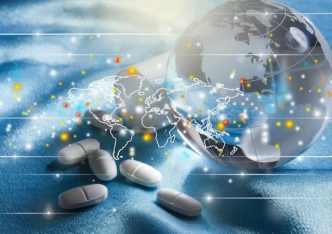
It was like a finely tuned orchestra losing half of its instruments when the pandemic struck. The peace of the world’s medical supply broke down into strife, exposing the system’s true fragility. A new composition is emerging today as leaders from different continents come together with the goal of making medicine supply chains noticeably more resilient, noticeably more flexible, and noticeably stronger.
The European Commission, the OECD, and international medical alliances have spearheaded a number of concerted efforts to reconstruct this vital infrastructure during the last two years. Their common objective is straightforward but incredibly ambitious: avoid shortages, protect access, and get ready for the next crisis before it happens.
| Focus Area | Description |
|---|---|
| Core Issue | Governments and coalitions are forming partnerships to reinforce medicine supply chains against disruptions from pandemics, conflicts, and climate change. |
| Main Initiatives | OECD “Critical Medicines Alliance,” EU’s Critical Medicines Act, and FP Analytics’ global coalition programs. |
| Key Strategies | Diversifying manufacturing, increasing transparency, digitizing logistics, and aligning international regulations. |
| Lessons from COVID-19 | Overdependence on single suppliers and export restrictions exposed structural weaknesses in supply chains. |
| Emerging Trends | Friend-shoring, public-private partnerships, and digital monitoring systems for real-time inventory management. |
| Global Challenges | Geopolitical tensions, rising costs, and limited visibility across production networks. |
| Source Reference | https://www.oecd.org/publications/2024/02 |
More than 70 ongoing initiatives are highlighted in the OECD’s most recent report, Securing Medical Supply Chains in a Post-Pandemic World. These include advanced manufacturing partnerships and information exchange networks. Twenty initiatives emphasize knowledge transfer, and seventeen initiatives concentrate on information sharing. Although it may sound formal, visibility is frequently the first line of defense, so these precautions are extremely important.
For instance, the Critical Medicines Act of the European Union promotes production diversification and offers incentives for “friend-shoring,” a tactic that shifts important manufacturing to partners with stable political environments. Despite its high cost, this strategy is especially advantageous for countries that rely on imports from unstable areas. In order to guarantee that no nation experiences another PPE-style panic, the Act also establishes frameworks for crisis preparedness.
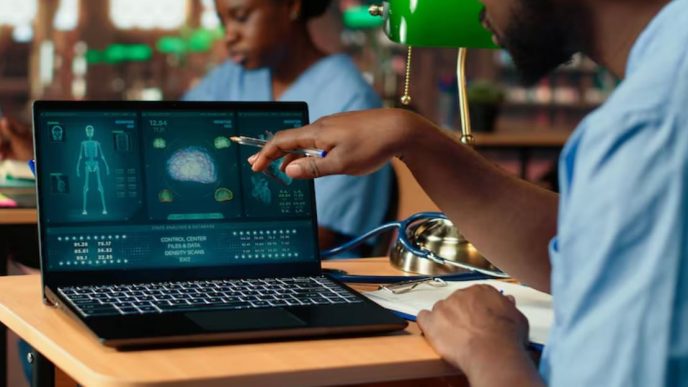
Additionally, international coalitions are making significant investments in data-driven solutions. Medical logistics supply managers can forecast demand, track shortages in real time, and foresee disruptions before they become serious by incorporating digital analytics. These systems, which are already in place in some regions of Southeast Asia and Europe, have shown remarkable success in lowering antibiotic and vital hormone shortages.
Pharmaceutical firms have noticed. Takeda, Pfizer, and AstraZeneca have joined a number of coalitions that support dual manufacturing networks and digital transparency. Although this kind of redundancy might seem ineffective on paper, it has shown itself to be a very strong defense against unexpected disruptions to trade.
Resilience tactics for low- and middle-income countries (LMICs) have been highlighted by FP Analytics and Chemonics. According to their reports, resilience is about governance, adaptability, and foresight rather than just having factories or stockpiles. In order to strengthen last-mile delivery systems and localize medicine production, LMICs—which are frequently the recipients of disrupted flows—are now creating adaptive frameworks.
The lack of redundancy became painfully apparent during the pandemic. Basic antibiotics were severely lacking in hospitals across Europe and Africa. Due to disruptions in the supply of raw materials from China, Indian manufacturers were unable to export active ingredients. This cascading effect demonstrated the pharmaceutical network’s increasing interconnectedness and vulnerability.
Governments and coalitions are responding by broadening their manufacturing base. India and Japan have started working together to boost domestic API production. With the addition of regionally dispersed depots, the U.S. Department of Health and Human Services is growing its Strategic National Stockpile. Pooled procurement is being made possible by Europe’s “Critical Medicines Alliance,” which guarantees that smaller countries can band together to negotiate for supply stability.
The change in the private sector has been equally significant. Pharmaceutical companies are no longer working independently; instead, they are working together through cloud-based logistics, strategic manufacturing partnerships, and shared databases. Digital twins, or virtual copies of supply systems, are being used to test resilience and model disruptions. Surprisingly, this technological and collaborative convergence has been successful in locating invisible bottlenecks.
The human element is still crucial. After all, people make up supply chains just as much as goods do. Logistics experts, engineers, and pharmacists make up the backbone of this new infrastructure. The resilience movement is being shaped internally by their capacity for cross-border innovation, adaptation, and communication.
Advocates and public figures are giving the discussion more moral weight. “Resilience is not a luxury; it’s an equity issue,” Melinda Gates recently stressed. Because it encapsulated the essence of this change—that the right to healthcare is inextricably linked to the capacity to endure disruptions—her comment reverberated throughout forums.
This is further supported by cultural similarities. Health coalitions are redefining preparedness in a similar way to how environmentalists redefined sustainability. The perspective is now proactive rather than reactive. Coalitions are investing in structures that can adapt without breaking instead of waiting for the next global crisis.
According to the OECD, the majority of current efforts concentrate on coordination and communication, which may seem intangible but are remarkably successful. Faster reactions, less duplication, and increased international trust are all made possible by shared intelligence. Through these interactions, resilience is transformed into a shared responsibility as well as an operational goal.
The core of this advancement is digital transformation. Coalitions can pinpoint areas where supply disruptions are likely to happen, whether as a result of shipping delays, export restrictions, or factory closures, by utilizing advanced analytics and machine learning. The ensuing insights allow for quicker remedial action, which greatly speeds up supply chains’ response and recovery.
Sustainability is also being incorporated into resilience planning in the pharmaceutical sector. Localized production, waste minimization, and green manufacturing not only lessen their negative effects on the environment but also free them from reliance on international shipping lanes. This dual strategy—resilient and sustainable—is especially creative and provides a model for other sectors dealing with comparable issues.
Resilience is seen as an investment rather than an expense by the younger generation of policymakers, which is encouraging. In keeping with the spirit of the climate accords, governments are creating cross-regional compacts, providing funding for early-warning systems, and offering incentives for private sector compliance. According to OECD data, this multi-sectoral cooperation has significantly enhanced coordination during minor crises, like the Eastern European antibiotic shortage in 2024.
The shift to medical resilience is a cultural development rather than merely a technical one. Leaders in the health sector are moving from the fantasy of unbounded efficiency to the reality of managed flexibility. “Efficiency is the melody; resilience is the rhythm that keeps it steady,” as one EU commissioner put it.
This change translates into trust for the populace. Confidence in healthcare systems and governance in general is bolstered by the knowledge that essential medications will be available when needed. Additionally, a more robust, equitable, and flexible network is starting to take shape as countries invest together.
Cooperation can turn vulnerability into strength, as evidenced by the new coalitions emerging across continents. They are building an ecosystem that can endure shocks without compromising access by fusing data, diplomacy, and resolve.
Momentum is evident, but the journey ahead will require perseverance and patience. Global supply networks may look very different ten years from now, characterized by shared resilience, flexibility, and foresight rather than fragility.