



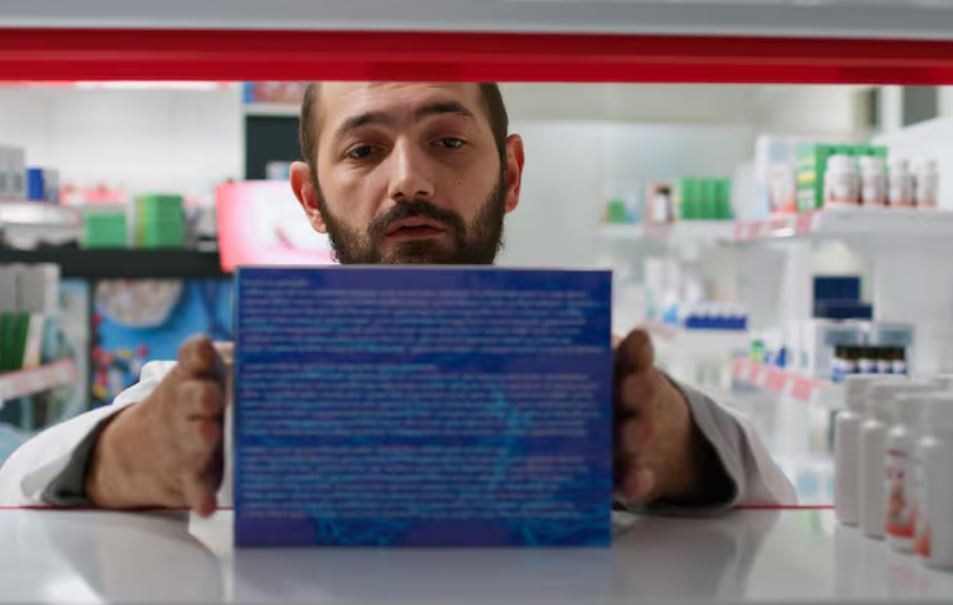
The everyday bustle of pharmacies now has an eerie undertone due to long wait times, empty shelves, and the growing annoyance of patients who are unable to fill prescriptions. Once rare, drug shortages are now frighteningly common. Health professionals are cautioning that this trend is not a passing fad but rather an ingrained crisis—a “new norm” in healthcare.
The difficulty, according to pharmacists, is both emotional and logistical. Fin McCaul, an independent pharmacist in Greater Manchester, stated, “We’re fighting fires every day.” His employees spend hours managing irate patients, tracking delivery schedules, and phoning suppliers. Many have experienced desperation-driven abuse. He said, “It’s heartbreaking.” “People feel abandoned by the system, which is why we see an increase in anxiety.”
| Point | Description |
|---|---|
| Scale of the Crisis | More than 200 essential drugs are currently listed as being in shortage across multiple regions, including the UK, EU, and US. |
| Core Causes | Supply chain fragility, post-pandemic manufacturing gaps, raw material scarcity, Brexit complications, and economic instability. |
| Most Affected Drugs | Antibiotics, epilepsy medicines, insulin, ADHD treatments, and hormone replacement therapy. |
| Impact on Healthcare | Treatment delays, patient anxiety, rationing of life-saving drugs, and strain on pharmacists and hospitals. |
| Key Reports | The Nuffield Trust, BMJ, and Royal Pharmaceutical Society describe shortages as the “new normal.” |
| Industry Outlook | Experts urge investment in domestic production, price reform for generics, and better forecasting systems. |
| Reference Source | https://www.bbc.com/future/article/20251021-why-drug-shortages-could-become-the-new-normal |
Current data emphasizes how urgent it is. According to a 2024 Royal Pharmaceutical Society survey, shortages affected more than 80 medications across more than 30 therapeutic areas. Among the missing, antibiotics, insulin, antidepressants, and ADHD drugs are most prevalent. According to the British Generic Manufacturers Association, almost half of UK adults had difficulty getting prescription drugs in the previous two years, and this trend doesn’t appear to be slowing down.
Experts attribute this crisis to a complex network of causes. A perfect storm has been created by manufacturing disruptions, a shortage of suppliers, and unexpected surges in demand. Global supply chains were overburdened following the pandemic, demonstrating how reliant pharmaceutical production is on a small number of crucial areas. Since over 70% of active pharmaceutical ingredients (APIs) come from Asia, a single factory closure or geopolitical unrest can have an impact on the entire world.
Another factor contributing to instability is the economic model underlying drug prices. The low cost of many necessary generics deters manufacturers from continuing to produce them. Shortages can spread swiftly after one producer leaves. “Low pricing has made the UK a less attractive market,” according to Mark Samuels of the British Generic Manufacturers Association, leaving pharmacists rushing to cover gaps that were previously filled by consistent imports.
Brexit has also contributed significantly to the worsening of shortages. The flow of medicines was hampered by trade restrictions, customs inspections, and inconsistent regulations, according to a 2024 report from the Nuffield Trust. The think tank’s Brexit program lead, Mark Dayan, stated that “nearly every indicator shows a once unthinkable level of shortages.” “Where smooth supply chains once existed, Brexit adds friction.”
However, politics and policy are not solely to blame. Demand has been greatly impacted by social trends. A nationwide scarcity of HRT patches and gels resulted from the spike in hormone replacement therapy prescriptions after Davina McCall’s documentary Sex, Myths, and the Menopause. Similar to this, off-label use of weight-loss medications like Ozempic and Wegovy has been promoted by viral social media campaigns, which have resulted in ongoing shortages. The demand landscape has changed more quickly than supply chains can adjust due to these cultural changes.
The repercussions are very personal for patients. Donia Youssef, a writer from Essex who takes ADHD medicine, called her monthly battle “an exhausting cycle of calls and disappointments.” She has to cut back on dosages, change brands, or stop taking her regular medication completely when it runs out. “Medication isn’t the only solution,” she stated. “It has to do with functioning.”
Healthcare workers are under just as much stress. Pharmacists frequently give “owings,” which are partial prescriptions that require patients to come back later to finish them. 99 percent of pharmacists deal with unavailable medications at least once a week, and the majority do so multiple times a day, according to Community Pharmacy England. Many employees say they cry when they leave work because of the stress, calling the system “beyond critical.”
The effects on the economy are just as bad. According to a mid-2025 parliamentary report, the NHS loses over £220 million a year as a result of medication shortages. While smaller pharmacies suffer losses or face closure, hospitals must deal with exorbitant prices for limited supplies. These financial hardships have an impact on local healthcare access as well as insurance premiums.
The pattern is remarkably similar on a global scale. Between late 2024 and early 2025, 400–800 medications were reported to be in short supply throughout Europe. The American Medical Association declared drug shortages to be a “urgent public health crisis” in the US, citing their effects on antibiotics, anesthesia, and cancer treatment. Shortages have occasionally resulted in tragic outcomes, like the 2022 death of two-year-old Ava Grace Hodgkinson, whose pharmacist was unable to get an antibiotic in time.
Experts stress that change is possible despite the bleak outlook. Both industry and policy are coming up with solutions. To lessen their dependency on imports, a number of European countries are investing in domestic API manufacturing. In order to stabilize the production of low-profit medications and build up strategic reserves of essential medications, governments are looking into financial incentives.
Innovation in technology gives us more hope. Some pharmaceutical networks are starting to predict shortages before they happen by using predictive modeling and advanced analytics. Some hospitals have already seen a 30% reduction in disruptions thanks to these systems, which have proven remarkably effective in pilot programs. Such instruments might serve as the foundation of a more robust system for supplying medications.
Additionally, a growing cultural movement toward transparency is taking place. The Royal Pharmaceutical Society has demanded better communication between government agencies and pharmacies as well as mandatory shortage-prevention plans for all manufacturers. The RPS Director for England, Dr. James Davies, stated that “patients can handle difficult news, but they can’t handle uncertainty.”
Celebrity advocacy has contributed to the escalation of these issues. The significance of medication stability has been emphasized by public figures such as Kate Garraway and Stephen Fry, who are both candid about their experiences managing long-term medical conditions. Their involvement has reframed what was once a quiet technical issue as a matter of everyday wellbeing, giving it much-needed public visibility.
In the end, the discourse surrounding medicine supply is changing from one of inevitable to one of accountable. Policymakers and pharmacists who see reform opportunities are challenging the notion that shortages are just “the new normal.” There is cautious hope that consistent access to medications worldwide can be restored through concerted international efforts, smarter systems, and moral pricing models.
Drug shortages put healthcare systems to the test, but they also present chances for improvement. “Maybe this crisis will finally make us rethink what reliability really means,” said one NHS pharmacist. Her remarks encapsulate the growing consensus that creating abundance via collaboration, creativity, and foresight rather than managing scarcity is the way of the future of healthcare.