


Christmas can be a difficult period for those using weight-loss injections, as traditional meals are often richer and more substantial. By choosing smaller servings, slowing eating pace and prioritising protein, it remains possible to enjoy festive food without compromising comfort.
To offer practical support, Superintendent Pharmacist Palvinder Deol has put together a sample 780-calorie Christmas meal to illustrate how to participate in seasonal dining while avoiding common issues such as bloating or nausea.
With an estimated 1.5 million people nationwide currently using GLP-1 weight-loss injections and prescribing soaring by more than 900 percent since 2020, a UK pharmacist is providing festive guidance to help users safely navigate Christmas.
These medications, including the widely prescribed Mounjaro, Wegovy and Ozempic, reduce appetite and slow the digestive process. Although beneficial for weight control, this also means that rich foods, large meals and alcohol may cause discomfort if people overeat during the holidays.
In response, Superintendent Pharmacist Palvinder Deol (GPhC) of Happy Pharmacy has released a set of Christmas recommendations aimed at reducing discomfort and promoting safer eating habits. Deol has also introduced a low-calorie, high-protein Christmas dinner option to help users enjoy the day without feeling overly limited.
“Christmas can be a difficult time for anyone trying to manage their weight, but for people taking weight-loss medications it requires an even more mindful approach,” says Deol. “These treatments make you feel full faster, so eating very rich foods or eating too quickly can cause discomfort. Smaller portions, slower eating and higher-protein choices make the day much easier and more enjoyable.”
Tips for Managing Christmas While Taking Weight-Loss Medications
- Eat slowly and stop at the first sign of fullness
These medications make people feel satisfied sooner than usual; continuing beyond this point increases the chance of nausea or bloating.
- Make protein the priority
Protein supports fullness and stabilises blood sugar. Turkey, prawns, salmon, eggs and Greek yogurt are all excellent festive choices.
- Limit very high-fat foods
Creamy sauces, fried items and rich gravies may be harder to digest.
- Keep portions small and space food throughout the day
A smaller plate and slower pace help reduce discomfort while still allowing favourite dishes to be enjoyed.
- Be cautious with alcohol
Alcohol can stimulate appetite and worsen dehydration. Sip slowly, alternate with water and avoid drinking on an empty stomach.
- Stay hydrated
Water supports digestion and helps reduce the risk of nausea.
- Plan lighter meals before and after Christmas dinner
This helps prevent overeating and supports steady energy levels.
Optional: Low-Calorie, High-Protein Christmas Dinner Plan
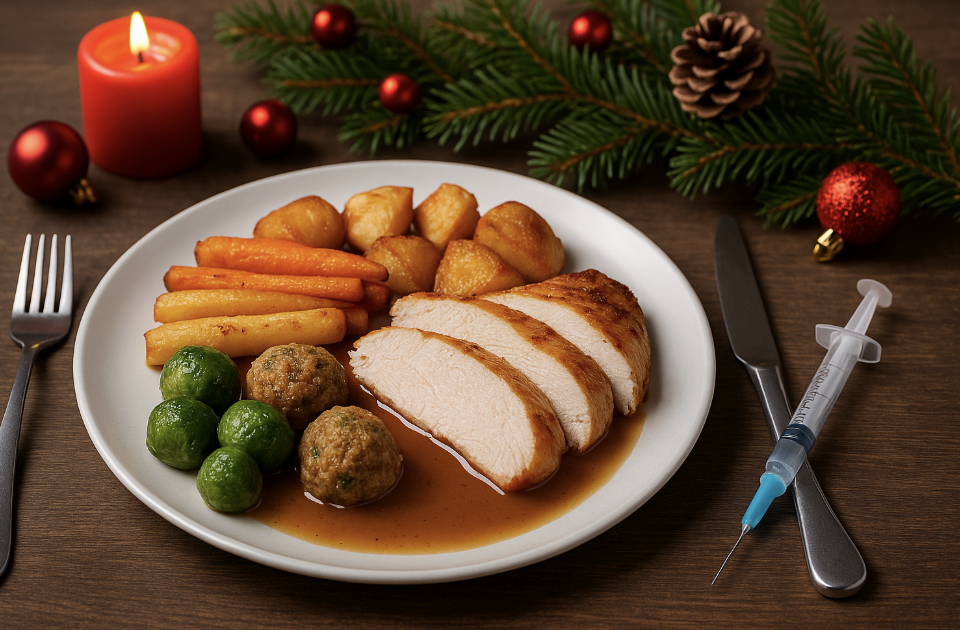
Designed to help people enjoy Christmas while minimising the risk of nausea, this suggested meal plan totals around 780 calories and 64g of protein, offering a balanced and satisfying alternative to very heavy meals.
Starter
Prawn cocktail with light Marie Rose sauce
Starter subtotal: 120 calories | 14g protein
Main
Roast turkey breast (100g, skin removed) – 150 calories | 30g protein
Air-fried roast potatoes (120g) – 160 calories | 3g protein
Roasted carrots & parsnips (1 tsp olive oil) – 90 calories | 1g protein
Steamed Brussels sprouts (100g) – 40 calories | 3g protein
Low-calorie stuffing ball – 55 calories | 4g protein
Light gravy (100ml) – 25 calories | 1g protein
Main subtotal: 520 calories | 42g protein
Dessert
Mini dark-chocolate & raspberry trifle (made with 0% Greek yogurt)
140 calories | 8g protein
Dessert subtotal: 140 calories | 8g protein
Total meal: ≈780 calories | ≈64g protein
About Superintendent Pharmacist Palvinder Deol
Palvinder Deol is a GPhC-registered Superintendent Pharmacist at Happy Pharmacy. He oversees all clinical governance, prescribing safety and the medical accuracy of the pharmacy’s treatments and content. Palvinder has more than 20 years of experience in community and digital pharmacy practice.